Most beginners fish when it’s convenient.
Late morning. Midday. Whenever they have time.
The problem?
Fish don’t care what’s convenient.
They follow patterns—light, temperature, and feeding behavior. If you’re fishing at the wrong time of day, you can do everything else right and still struggle.
Understanding when fish are most active is one of the fastest ways to start catching more fish without changing your gear or technique.
If you’re just getting started, build your foundation here:
👉 [Fishing for Beginners — A Simple, Stress-Free Way to Start]
When Are Fish Most Active?
Fish are most active during low-light periods, especially:
- early morning (sunrise)
- late evening (sunset)
These are called feeding windows.
During these times:
- fish move into shallow water
- they feed more aggressively
- they’re more willing to strike
If your goal is to catch more fish consistently, timing matters more than most people realize.
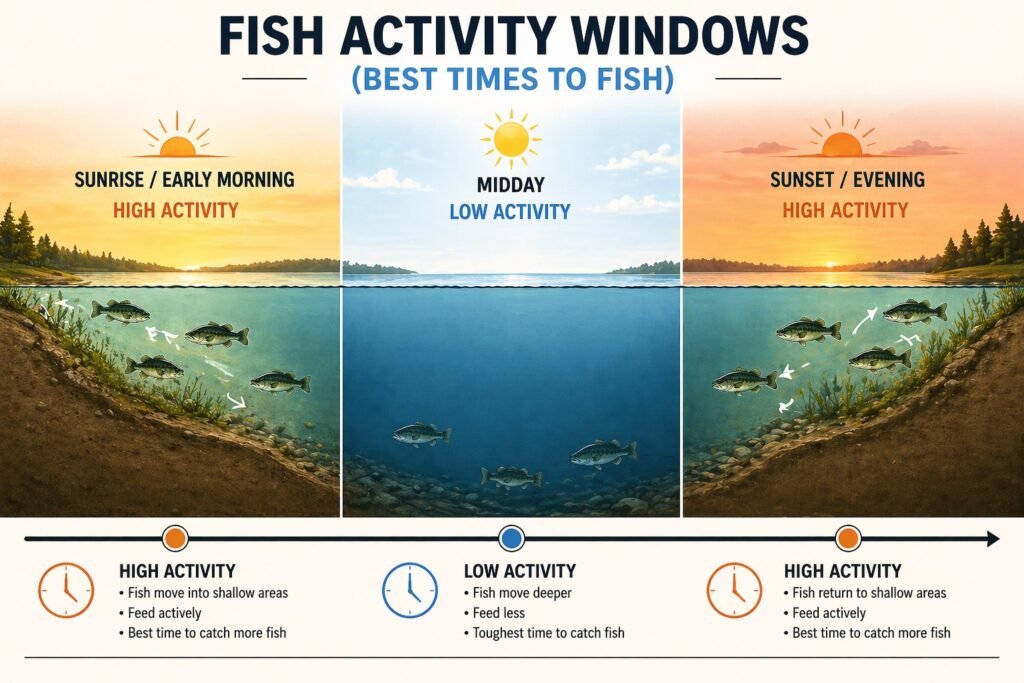
Fish are more active during low light periods like sunrise and sunset, while midday activity slows as fish move deeper.
Early Morning Fishing (Best Time Overall)
Early morning is the most reliable time to fish.
Why it works:
- cooler water temperatures
- low light conditions
- reduced fishing pressure
- increased feeding activity
Fish move shallow to feed after resting overnight, making them easier to locate and catch.
This is one of the best times to use simple setups:
👉 [Best Fishing Baits for Beginners]
If you can only fish once a day—fish early.
Late Evening Fishing (Second Best Window)
Late evening fishing is almost identical to morning.
As the sun drops:
- water begins to cool
- light levels decrease
- fish become active again
Fish often move back into shallow areas to feed before night.
If mornings aren’t an option, evenings are your next best bet.
Midday Fishing (Why It Gets Harder)
Midday is when most beginners fish—and it’s usually the toughest time.
Why fish slow down:
- bright sunlight pushes fish deeper
- warmer water reduces activity
- fish become less aggressive
That doesn’t mean you can’t catch fish—you just need to adjust:
- fish deeper water
- slow your presentation
- target shade and structure
If you’re struggling here, it’s usually a location issue:
👉 [How to Read Water When Fishing]
Night Fishing (When It Works Best)
Night fishing can be very effective, especially in warmer months.
Some fish become more active at night because:
- temperatures drop
- fishing pressure disappears
- they feel safer feeding shallow
Keep it simple:
- fish slower
- stay consistent
- focus on known areas
Helpful gear for this:
How Weather Affects Fish Activity
You don’t need to overcomplicate this, but a few patterns matter.
Cloudy vs Sunny
- Cloudy days extend feeding activity
- Sunny days push fish deeper or into cover
Wind
Wind can improve fishing by:
- breaking up light penetration
- pushing baitfish toward shore
- positioning fish
Pressure Changes
Stable weather = more predictable fishing
Sudden changes = slower or inconsistent activity
Seasonal Changes (Keep It Simple)
Fish behavior changes with the seasons, but timing still matters.
- Spring and Summer: more active, strong morning and evening bites
- Fall: aggressive feeding periods
- Winter: slower movement, shorter feeding windows
Fish are still most active during low-light periods—just at different intensity levels.
Best Fishing Times for Beginners (Simple Strategy)
If you’re trying to keep this simple, do this:
- Fish early morning whenever possible
- Fish late evening if mornings don’t work
- If fishing midday, go deeper and slow down
That one adjustment alone will outperform most beginners.
To bring it all together:
👉 [How to Catch Fish (What Actually Works)]
Common Beginner Mistakes
Fishing only when it’s convenient
Midday is easy—but often the worst time.
Not adjusting for conditions
Fishing the same way all day doesn’t work.
Leaving too early
Sometimes the bite hasn’t started yet.
Ignoring patterns
Fish activity is predictable if you pay attention.
Conclusion
If you want to catch more fish, fix your timing first.
You don’t need better gear.
You don’t need complicated techniques.
You just need to fish when fish are actually feeding.
Start paying attention to:
- time of day
- light levels
- temperature
Do that consistently, and you’ll start catching more fish—fast.
FAQ
When are fish most active?
Fish are most active during early morning and late evening when light levels are low and feeding activity increases.
What is the best time to go fishing?
The best time to go fishing is around sunrise and sunset.
Do fish bite more in the morning or evening?
Both are productive, but early morning is typically the most consistent.
Is midday fishing bad?
Not bad—but harder. Fish move deeper and become less active.
Do fish bite at night?
Yes, especially in warmer months.