There’s a certain feeling when you walk into your local sporting goods store and you know exactly what you’re there for.
You grab what you need.
Head to the counter.
Done.
Nothing like it.
But it wasn’t always that way for me.
I remember walking in years ago just browsing — trying to figure it out — and feeling completely overwhelmed. Endcaps stacked with big-name brands. Shelves overflowing with the “next best thing.” Every product promising to change your experience.
Before long, you start questioning what you actually need.
And I’ll be the first to admit — I’ve fallen for it. I’ve seen something, heard good things about it, and thought, I need that. Not sure why. It just felt like I did.
With the fishing industry worth billions every year, it’s no surprise companies are constantly pushing must-have gear.
And honestly? Sometimes I still grab a few things.
But that’s not what this is about.
This is about getting you — yes, you — ready for your first time fishing.
Not someday.
Not after you buy everything.
Just ready.
If you’ve ever felt that quiet pressure to “have it all,” you’re not alone. I wrote about that same mindset shift in Learning Was Never the Problem — Interpretation Was.
Let’s focus on what you actually need.
Nothing more.
1. A Simple Rod and Reel Combo
You do not need a custom rod.
You do not need high-end components.
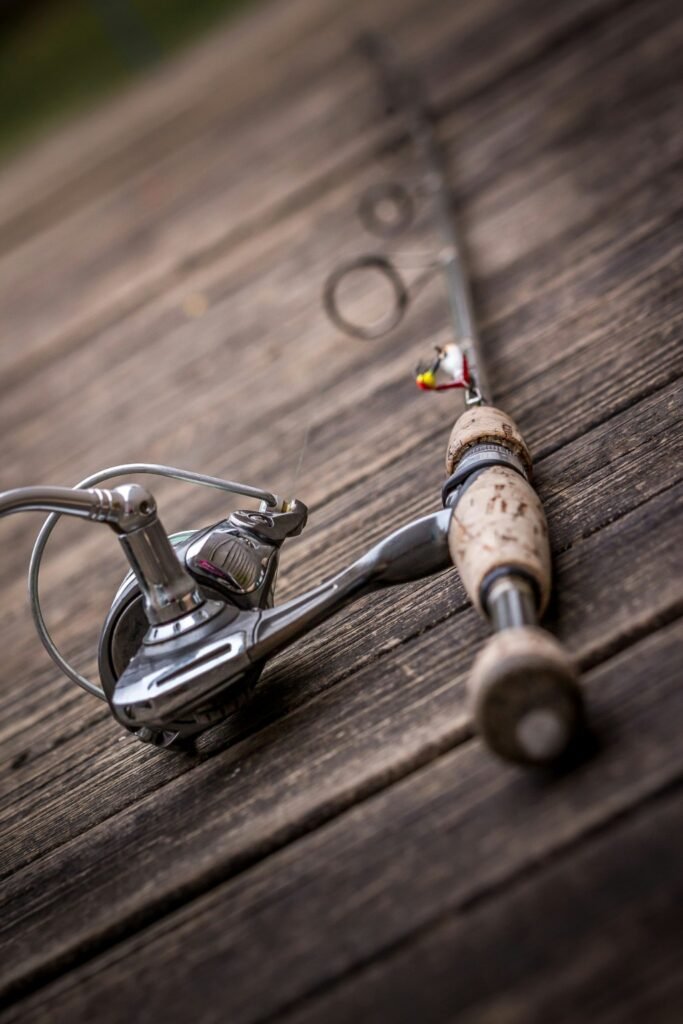
You need a basic spinning combo that is simple, forgiving, and easy to use.
A 6–7 foot medium spinning combo is more than enough for most ponds, lakes, and smaller reservoirs.
Something like a basic spinning combo setup will handle nearly everything you’ll encounter starting out.
There are affordable options that work perfectly fine for beginners. And yes, there are higher-end setups that feel smoother and last longer.
Both can catch fish.
The key is starting.
2. Fishing Line (Keep It Simple)
Most beginner combos come pre-spooled.
If you need to replace it, a basic 8–10 lb monofilament line will work for most freshwater situations.
You don’t need specialty lines.
You don’t need five variations.
You don’t need to decode technical jargon.
Just something dependable.
3. A Small Tackle Box — Not a Giant One
This is where most beginners overspend.
You don’t need 200 lures.
Start with:
A few hooks
Split shot weights
A couple bobbers
One or two simple lures (a spinner or soft plastic is plenty)
A compact tackle box keeps things organized without overwhelming you.
Fishing gets complicated when you carry everything.
It gets enjoyable when you carry only what you understand.
If you’ve read Learning When to Stay Put Instead of Moving On, you know I’m a big believer in keeping your setup simple at first.
4. Pliers or a Simple Tool
Hooks get stuck.
Fish swallow bait.
Line needs trimming.
A small pair of fishing pliers solves almost every minor issue you’ll run into.
It’s a small item — but one that prevents frustration quickly.
5. A License (If Required)
Not gear — but essential.
Check your local regulations before heading out.
Fishing is relaxing.
Fines are not.
What You Don’t Need
You don’t need:
Every lure on the shelf
Expensive electronics
A boat
A perfectly curated tackle system
You need water.
You need patience.
You need to accept that some days are slow.
Most people don’t quit fishing because they didn’t buy enough gear. They quit because they felt behind before they ever started.
It’s called fishing for a reason.
Budget vs Better — The Honest Truth
You can start fishing for very little money.
Budget gear works.
Quality gear often:
Casts smoother
Feels better in hand
Lasts longer
If you know you’re going to stick with it, upgrading later makes sense.
If you’re just getting started, don’t let price keep you from the water.
Start simple.
Upgrade when it feels right — not when marketing tells you to.
That’s how you avoid wasting money — and that’s something I’ve learned the hard way more than once.
Final Thought
Fishing isn’t about owning everything.
It’s about showing up.
The first time you go out, you won’t have it all figured out.
That’s fine.
You’re not trying to impress anyone.
You’re trying to experience something.
Start with what you need.
Leave the rest on the shelf.