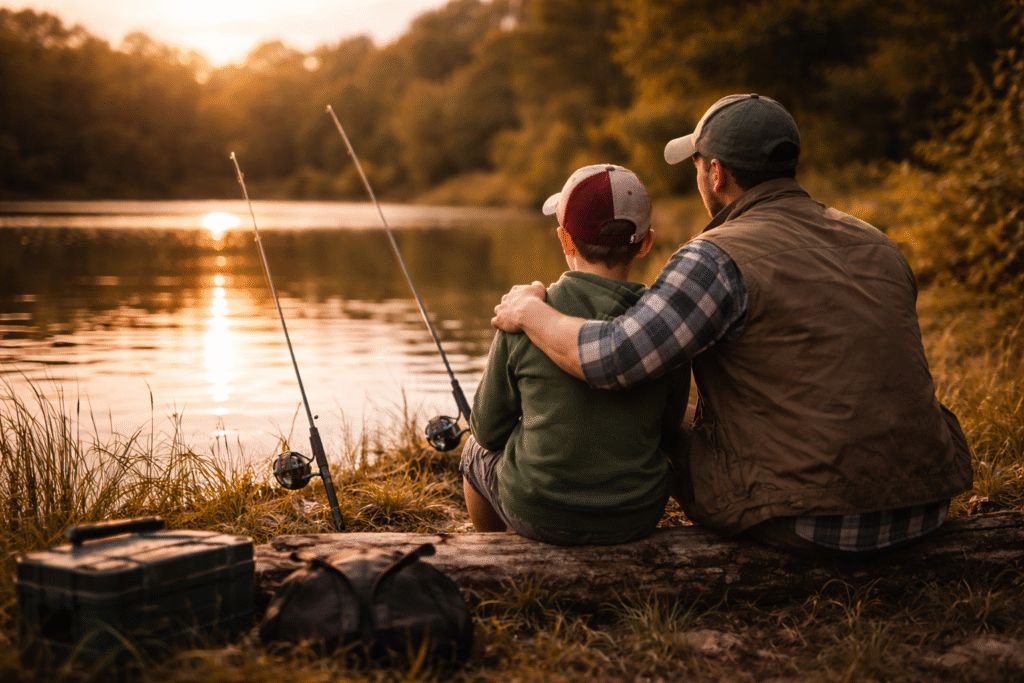
I can remember the day my son caught his first fish like it was yesterday.
Not because of the size of the fish — though it was a solid one — but because of everything that happened around it.
He was young, full of excitement, and barely able to stand still. When that fish finally bit, the calm of the day disappeared in an instant. His eyes went wide. His hands tightened on the rod. And then came the panic.
In the middle of all that excitement, he slipped and fell straight into the mud.
But that didn’t stop him.
Flopping around on the bank himself, rod still in hand, he kept reeling. He reeled and reeled, determined not to let go. Eventually he stood up, muddy from head to toe, and landed that fish like a boss.
It was one of those moments where you’re laughing so hard you can barely breathe — but at the same time, you’re unbelievably proud.
I wouldn’t trade that day for anything in the world.
The fish ended up being about a three-pound largemouth bass. But the bass wasn’t the only thing that got hooked that day.
Why First Fishing Trips Matter More Than We Realize
When people talk about taking kids fishing, the focus often turns to outcomes.
Did they catch anything?
Was it a big fish?
Did they do it “right”?
But the truth is, those things don’t matter nearly as much as we think.
What kids remember isn’t the size of the fish — it’s how the moment felt.
The excitement.
The encouragement.
The laughter.
The feeling of not giving up.
That day wasn’t about teaching technique. It wasn’t about gear. It wasn’t about doing everything perfectly.
It was about letting a kid experience something real.
Let the Moment Be Messy
Kids don’t fish like adults — and they shouldn’t.
They trip.
They tangle lines.
They get muddy.
They panic.
They laugh at the wrong time.
And that’s exactly how it should be.
That day, my son didn’t look like a polished angler standing clean and confident on the bank. He looked like a kid having the time of his life, fully invested in the moment.
And that’s the version of fishing that sticks.
When kids are allowed to struggle a little — safely and supported — they learn perseverance. When they’re allowed to fail without pressure, they learn confidence. When they’re encouraged instead of corrected constantly, they learn to love the experience.
The Fish Isn’t the Goal — The Feeling Is
It would be easy to say, “That was the day he became an exceptional fisherman.”
And in a way, it was.
But not because he landed a fish.
It was because fishing became his.
After that day, he went many times without that kind of luck. There were slow days. Skunked days. Days when nothing bit at all.
But when he walks a bank now, looking for his next personal record, that smile is still there.
And that smile isn’t something money can buy.
That’s how you know you did it right.
What Kids Actually Learn When Fishing
Fishing teaches lessons quietly — without lectures or instructions.
Kids learn:
- Patience while waiting for a bite
- Focus while watching the water
- Resilience when things don’t go their way
- Confidence when they stick with it
- Respect for the outdoors and wildlife
These lessons don’t come from catching fish. They come from being present.
That’s why fishing works so well for kids. It doesn’t rush them. It doesn’t overstimulate them. It invites them to slow down in a world that rarely does.
Your Role as a Parent Isn’t to Create a Perfect Trip
It’s tempting to want everything to go smoothly.
We want:
- Good weather
- Cooperative fish
- No tangles
- No frustration
But those “perfect” trips aren’t what build lasting memories.
The imperfect days do.
Your role isn’t to guarantee success — it’s to provide encouragement, patience, and presence.
Celebrate the effort.
Laugh at the mess.
Let the moment unfold naturally.
Kids don’t need perfection. They need permission to try.
Why These Moments Last a Lifetime
Long after the details fade — the lure used, the exact spot, the time of day — what remains is the feeling.
The laughter on the bank.
The excitement in their voice.
The pride in sticking with something difficult.
That’s why fishing becomes more than a hobby for so many people. It’s tied to memory. To connection. To family.
And those connections don’t require constant success.
They just require showing up.
Fishing Is a Gift You Give Without Even Realizing It
When you take a child fishing, you’re not just giving them a chance to catch a fish.
You’re giving them:
- Time
- Attention
- Patience
- Space to grow
- A memory they’ll carry forever
That day my son fell in the mud and reeled in his first fish wasn’t about the bass.
It was about perseverance.
It was about joy.
It was about not giving up.
And those are lessons that extend far beyond the water.
What Actually Matters
If you remember nothing else, remember this:
- Keep it simple
- Keep it positive
- Keep it pressure-free
- Let kids be kids
- Let fishing be fishing
The fish will come and go.
But the memories — and that smile — will stay.
And that’s what actually matters.