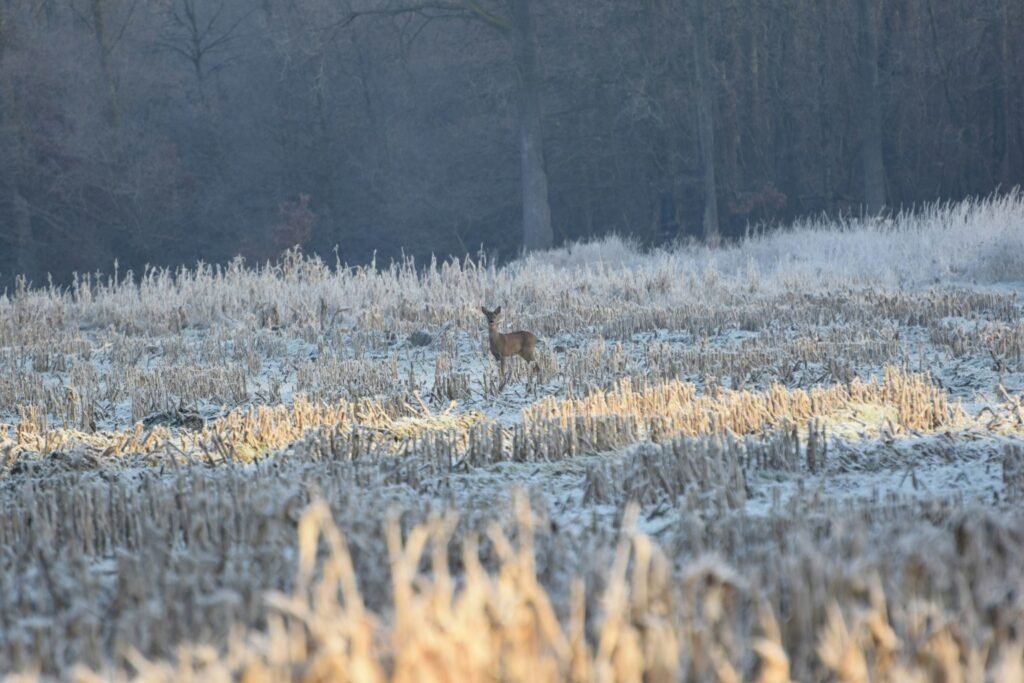
I can’t speak for every hunter out there, but I know for me, some of my earliest hunts were unintentionally comical.
I’d walk in before daylight, set up exactly how I thought I was supposed to, settle in, and wait. An hour would pass. Sometimes more. Nothing would move. Nothing would show. Not even a squirrel doing something worth watching.
And somewhere in that quiet stretch, my mind would turn on me.
Why did I even choose this spot?
What was I thinking?
This is clearly the worst place I could’ve sat.
I’d replay the walk in. The tree I passed. The trail I didn’t follow. I’d convince myself—completely—that I’d misread everything. That I’d wasted the morning before it ever had a chance to unfold.
Eventually, I’d do what felt productive: I’d get up and move.
At the time, it felt like adjustment. Like learning. Like I was responding to information.
Looking back, I can see it for what it really was.
I wasn’t reacting to the woods.
I was reacting to discomfort.
When Discomfort Feels Like “Good Decision-Making”
That’s the part that’s easy to miss early on—the way discomfort disguises itself as decision-making. It feels active. Responsible. Like judgment.
But real judgment in hunting is quieter, slower, and usually decided long before you ever sit down.
The truth—the part that took me longer to accept—was that most of the time, I was sitting in a perfectly solid spot. Nothing was wrong. Nothing had failed. I just hadn’t been rewarded yet.
But early on, not seeing anything felt like proof I’d made a mistake.
I didn’t know then what I was actually looking for in the woods. I didn’t know how long things could take. I didn’t understand how normal it was for stretches of nothing to exist inside a good hunt.
So I filled that silence with doubt.
Every quiet minute felt like it needed to be explained. And if I couldn’t explain it, I assumed the explanation was simple: I picked wrong.
That belief followed me for years longer than I’d like to admit.
When I Realized “Nothing Happening” Wasn’t a Signal
The shift didn’t happen on a hunt where everything finally worked.
It happened when I started noticing a pattern I couldn’t ignore.
I’d move spots—and still not see anything. Or I’d leave a location, only to find sign later that confirmed animals were using it. Or I’d circle back to places I’d abandoned too quickly and realize they made more sense than I gave them credit for.
Slowly, uncomfortably, it became clear: the problem wasn’t my spot selection.
It was my interpretation of silence.
I had been treating the absence of movement as information, when in reality, it was just time passing.
Once I saw that, everything slowed down.
I stopped assuming that an hour of nothing meant failure. I stopped believing that every hunt was supposed to produce visible confirmation. I learned that not seeing anything—sometimes for long stretches—was perfectly normal.
More importantly, I learned that overthinking was louder than the woods.
Hunting doesn’t reward impatience. Seasons don’t bend for it. Land doesn’t respond to it. Limits exist because restraint is part of the system, not something to work around.
What Changed When I Started Trusting the Setup
When I finally allowed for that possibility, something clicked.
Instead of scanning constantly for proof I was right or wrong, I started paying attention to why a spot made sense in the first place. Terrain. Edges. How the area connected to other features. Where movement could happen, even if it hadn’t yet.
I wasn’t trying to predict the moment anymore.
I was learning to trust the setup.
That trust didn’t come from success stories or highlight moments. It came from staying put long enough to realize that the woods don’t operate on my internal timeline.
And once I stopped demanding immediate feedback, my mind finally quieted down.
The urge to get up and move didn’t disappear overnight—but it lost its authority. I could feel it surface and let it pass instead of obeying it.
That was new.
What surprised me most was how much relief came with that realization.
I wasn’t doing more. I wasn’t trying harder. I wasn’t forcing patience.
I was simply no longer fighting the natural rhythm of the hunt.
The Lesson I Carry Into Every Quiet Sit
Over time, everything did start to come together—but not in the way I expected.
I learned what I was actually looking for in the woods, instead of just looking for something to happen. I understood where setting up made sense and why waiting mattered. I stopped confusing quiet with failure.
And with that, the mental spiral that used to define my early sits faded into the background.
Now, when a stretch passes without movement, it doesn’t trigger the same doubt. It feels like part of the process, not evidence against it.
I trust the spot more. I trust my judgment more. And I don’t feel the need to constantly correct myself just to feel productive.
Looking back, I can see how much energy I wasted trying to outrun uncertainty.
I thought slowing down meant risking missed opportunities. What I didn’t realize was that rushing was costing me presence—and clarity—long before it ever improved outcomes.
The woods didn’t change.
I did.
And once I accepted that sometimes nothing happening is exactly what’s supposed to be happening, hunting became quieter, steadier, and far more honest than it ever was when I was chasing constant reassurance.