I’ve never been able to accept the idea that you simply can’t catch a fish in an area.
For me, that statement doesn’t feel like a conclusion — it feels like an invitation. A quiet challenge waiting to be answered.
That doesn’t mean I stubbornly stand in one exact spot all day. It doesn’t mean I ignore what the water is telling me. What it means is that I don’t pack up and leave just because I haven’t been rewarded yet.
There’s an important difference between being patient and being passive.
Staying put doesn’t mean doing nothing.
It means staying engaged long enough to understand what’s actually happening.
The Challenge Isn’t the Fish — It’s the Moment
Most anglers don’t leave because they know a spot is bad.
They leave because the moment gets uncomfortable.
When nothing happens for a while, doubt starts creeping in. You begin wondering if you picked the wrong spot, if the time of day is off, or if the fish simply aren’t there. Leaving feels productive. It feels like taking control.
But more often than not, that urge has nothing to do with information.
It’s just discomfort asking to be relieved.
That’s the moment I lean into instead of walking away.
Staying Put Doesn’t Mean Standing Still
When I find a spot that feels worth fishing, I give it room to breathe.
I’ll cast for a while and let things settle. If nothing changes, I don’t immediately abandon it. Instead, I’ll walk a short distance up the bank — usually no more than fifty feet — and fish my way back.
If that doesn’t reveal anything, I’ll do the same thing in the other direction.
Then I return to where I started.
That movement isn’t about finding a new spot. It’s about learning the one I’m already in. Depth changes. Structure shifts. Current behaves differently just a few steps away.
I’m still connected to the same water — I’m just letting it show me more.
Why Simple Gear Makes Patience Easier
One reason I’m comfortable staying longer is because I keep my setup simple.
I don’t carry everything I own. I don’t turn the outing into a production. I bring what allows me to stay present without feeling anchored or rushed.
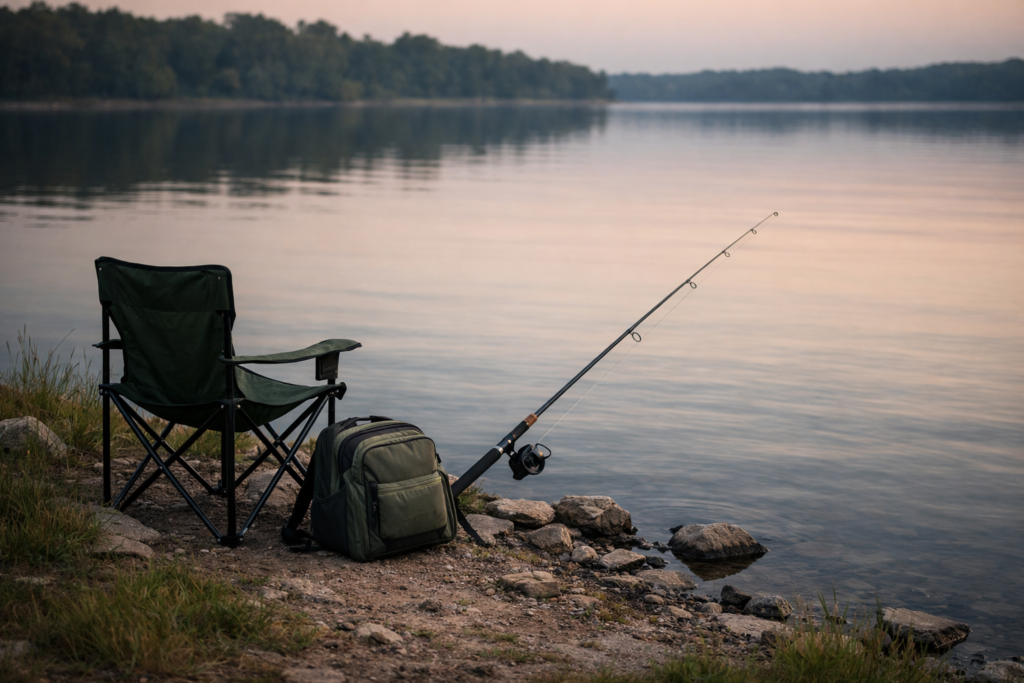
A lightweight fishing chair fits naturally into this approach — not because it catches fish, but because it supports patience. Being able to sit comfortably without constantly shifting makes staying put feel natural instead of forced.
Comfort doesn’t make you lazy.
It makes you patient.
A backpack-style tackle box matters for the same reason. Everything stays with me. No trips back to the car. No piles of gear. I can move a short distance, sit back down, and adjust without breaking focus.
Simplicity keeps the conversation with the water uninterrupted.
Movement With Intention, Not Escape
As I move along the bank, I’m not wandering aimlessly.
I’m paying attention.
I might adjust depth, change pace, or swap a lure. These aren’t dramatic changes — they’re small responses to what I’m noticing.
The key is that I’m making adjustments without leaving.
Every time you pack up and go somewhere else, that conversation resets.
Patterns Rarely Show Up All at Once
Most days like this don’t turn into instant action.
Usually, something small happens first.
A bite where there hadn’t been one. A stretch of water that suddenly feels different. A quiet moment where something clicks — not because you forced it, but because you stayed long enough to notice it.
Once that first piece appears, the rest often follows.
That’s usually when things begin to change.
Why I Don’t Call It a Bad Day
On days when nothing seems to work, I don’t say I wasted my time.
I don’t say I picked the wrong spot.
I say something else instead.
Challenge accepted.
That mindset keeps me curious instead of frustrated. It keeps me engaged instead of rushed. It reminds me that fishing isn’t about instant feedback — it’s about staying long enough for understanding to develop.
Some days end with fish on the line.
Some days end with clarity.
Both matter.
Leaving Is Always an Option — Just Not the First One
Staying put doesn’t trap you. You can always leave later.
But when leaving becomes the first response to uncertainty, you miss lessons that only show up with time. Some of the most valuable understanding I’ve gained while fishing came from moments when I almost packed up — and didn’t.
Those moments taught me more than quick success ever did.
Staying Builds Trust Over Time
The longer you practice staying put, the more something subtle changes.
You start trusting yourself.
Not because you’re always right — but because you learn you don’t need immediate results to feel confident. Uncertainty no longer requires escape. Decisions feel calmer and more grounded.
That trust carries into every future trip.
Some Lessons Only Show Up If You Don’t Leave
Fishing doesn’t rush understanding.
Some places reveal themselves quickly. Others require you to stay close, adjust quietly, and listen.
Learning when to stay put isn’t about proving a point. It’s about giving the water enough time to answer honestly.
Sometimes that answer is a fish.
Sometimes it’s insight.
Either way, you leave with more than you arrived with — and that’s never time wasted.