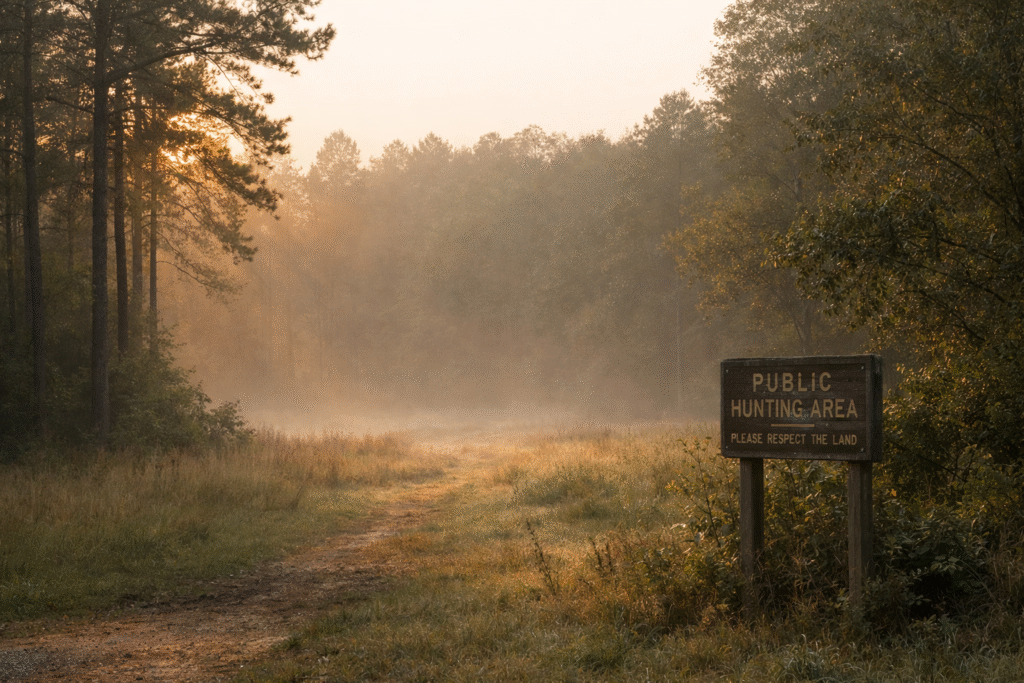
Hunting exists because it is built on respect.
Respect for the land that holds the game.
Respect for the wildlife itself.
Respect for seasons, limits, and laws.
And respect for the generations who will come after us.
Without those things, hunting doesn’t just change — it disappears.
Why Hunting Depends on Respect
I was reminded of that truth during a quota hunt I shared with my son at Piedmont National Wildlife Refuge. It was the kind of hunt meant to be slow and intentional. Limited access. Clear rules. Mandatory check-in and reporting. Everything designed to balance opportunity with responsibility.
This wasn’t about maximizing success. It was about protecting the resource — and the tradition.
When Responsibility Is Ignored
While moving through the woods, we came across multiple deer that had been killed by gunshot. The antlers had been removed. Little to no meat was taken. None of those deer had been reported at the required check station.
I don’t share that story to accuse or inflame. I share it because it wasn’t shocking. It was familiar — and that’s what made it troubling.
That moment wasn’t an isolated incident. It was simply one example of something I’ve seen in different forms over the years. Trash left behind in the woods. Private land crossed without permission. Game taken outside of season. Limits ignored. Rules treated as suggestions instead of boundaries.
Most Hunters Do It Right
It’s important to say this clearly: most hunters do it right.
Most hunters respect the land they walk on.
Most hunters care deeply about the animals they pursue.
Most hunters follow the seasons, report their harvests, and stay within limits.
The problem isn’t that unethical behavior defines hunting.
The problem is that it threatens it.
Every regulation, season structure, and limit exists for a reason. Not to make hunting harder — but to make it possible. These systems are built on trust. Trust that hunters will act responsibly even when no one is watching. Trust that we understand we are participants in conservation, not just consumers of opportunity.
When that trust erodes, consequences follow. Access gets restricted. Regulations tighten. Public support weakens. Not because hunting is wrong — but because responsibility was ignored.
What We Pass On to the Next Generation
Walking those woods with my son beside me, I was reminded that when we bring our children hunting, it becomes almost more important to teach how to be a good hunter than how to be a good shot.
Marksmanship matters, but it comes later.
Ethics come first.
The lessons that shape a hunter aren’t learned at the range. They’re learned in how we treat the land. In how we talk about seasons and limits. In whether we follow the rules when it would be easy not to. Those lessons, instilled early, are what create responsible hunters later in life.
Children don’t just hear what we say — they watch what we do. The standards we hold ourselves to in the woods become the standards they carry forward. The hunters they see us being are the hunters they grow into.
Responsibility Is the Reason Hunting Endures
Hunting has never been just about harvesting an animal. It’s about restraint. Awareness. Knowing when to act — and when not to. It’s about understanding that every decision carries weight beyond that moment.
Hunting is not a right without responsibility.
Respecting land, seasons, limits, and reporting requirements is not optional. It is the reason hunting is allowed to continue at all. The true cost of unethical behavior isn’t fines or citations. It’s the slow erosion of opportunity for everyone else.
Hunting survives only when it is practiced with respect. Stewardship is quiet. Unglamorous. Often unseen. And doing things the right way matters most when no one is watching.
This isn’t about rules.
It’s about responsibility.