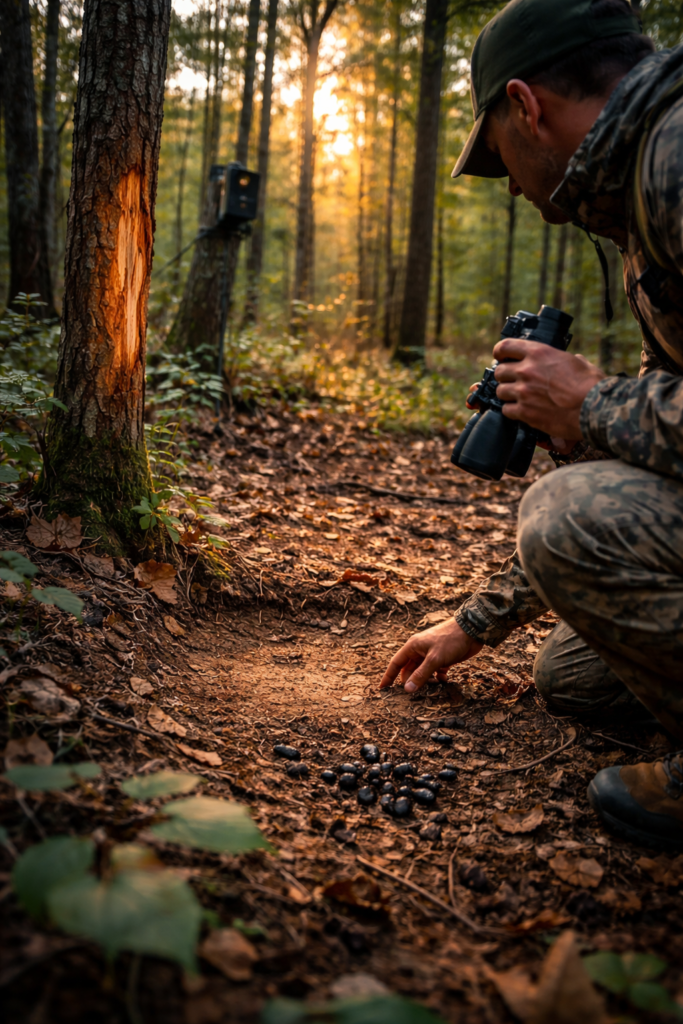
Scouting sounds simple.
“Just get out there and look.”
But when I first started scouting on my own, it didn’t feel simple at all.
It felt overwhelming.
I remember walking through the woods thinking I was doing everything right — covering ground, checking for sign, looking for a good tree to hang a stand.
In reality, I was mostly walking in circles.
And if I’m being fully honest, I jumped more deer while “scouting” than I saw the entire previous season.
That wasn’t intentional.
But it taught me something important:
Scouting isn’t just about finding deer.
It’s about understanding how they use an area — and knowing when to step back.
If you’re learning how to scout for deer, this guide will walk you through what actually matters, without overcomplicating it.
What Scouting for Deer Really Means
Scouting is not randomly walking through the woods.
And it’s not just “looking for deer.”
Scouting is learning patterns.
Deer move for three main reasons:
• Food
• Safety
• Breeding (during the rut)
If you understand those three drivers, scouting becomes clearer.
You’re not searching blindly.
You’re identifying where those needs overlap.
When to Scout for Deer (Timing Matters)
One of the biggest mistakes I made early on wasn’t reading sign incorrectly.
It was scouting too close to opening day.
I had found what looked like a perfect area:
Water nearby.
White oaks dropping acorns.
A field edge.
Two thick bedding areas.
Everything was there.
The problem?
I was walking through it two weeks before season — and even two days before opening day — looking for more sign and a better stand tree.
Every time I pushed into those thick areas, I bumped deer out.
I didn’t ruin the spot because it was bad.
I ruined it because I pressured it.
If I had done that same scouting months earlier and then backed out, the outcome likely would have been different.
Scouting is information gathering.
But it’s also about timing and restraint.
I talk about this in depth in Why the Best Hunting Season Starts When the Last One Ends
What to Look for When Scouting Deer
When people say “look for sign,” here’s what they mean.
Deer Tracks
Deer tracks are heart-shaped impressions in soil, mud, or sand.
Fresh tracks have sharp edges.
Older tracks look softer and faded.
Multiple tracks moving in the same direction can indicate a travel route.
One track alone doesn’t tell you much.
Patterns do.
Deer Scat
Scat (droppings) tells you deer are feeding nearby.
Fresh droppings are darker and slightly shiny.
Older droppings dry out and lighten.
Again, this is one piece of the puzzle — not the whole picture.
Buck Rubs
A rub is where a buck scrapes its antlers against a tree.
You’ll see bark removed and sometimes wood exposed.
Rubs indicate that a buck passed through.
They do not guarantee daylight movement.
They are clues, not confirmations.
We’ll go deeper into how to interpret rubs properly in a separate guide.
Deer Scrapes
A scrape is a patch of dirt a buck pawed open, usually under a low overhanging branch called a licking branch.
Scrapes are communication points.
They often increase in activity during pre-rut and rut periods.
But not every disturbed patch of dirt is a scrape.
Context matters:
• Location
• Timing
• Tracks nearby
• Overhanging branch use
We’ll break down how to identify an active scrape in detail in a future post.
For now, just understand that scrapes are part of a communication system — not random dirt.
Food Sources: The Foundation of Movement
If you’re wondering how to find deer before hunting season, start with food.
Common deer food sources include:
Hard Mast
Acorns and nuts. When white oaks are dropping, deer often prioritize them.
Soft Mast
Fruit and berries.
Browse
Young vegetation and shoots.
Agricultural Crops
Corn, soybeans, or nearby fields.
Food draws deer.
Cover keeps them.
Travel routes connect the two.
Bedding Areas vs Travel Routes
Bedding Areas
Thick, secure cover — often slightly elevated.
This is where deer feel safest.
Many beginners (myself included) walk directly into bedding areas while scouting.
That’s often when deer get bumped.
Sometimes the smartest scouting move is to locate bedding — then back out.
Travel Routes
Travel routes are consistent paths deer use between bedding and feeding areas.
Look for:
• Multiple tracks
• Worn trails
• Narrow passages between thicker cover
Funnels, edges, and transitions matter.
You don’t need to master terrain reading immediately.
You need to recognize repeat movement.
Why Wind Matters When Scouting
You’ll hear hunters say:
“Hunt the wind.”
But wind matters during scouting too.
Deer rely heavily on their sense of smell.
If your scent blows into bedding areas or feeding zones, deer know you’re there long before you see them.
Even while scouting, pay attention to wind direction.
You don’t have to master thermals yet.
Just begin noticing which way air is moving.
It changes how deer respond to pressure.
Common Deer Scouting Mistakes Beginners Make
• Scouting too close to opening day
• Walking through bedding areas repeatedly
• Ignoring wind direction
• Treating one sign as proof instead of looking for patterns
• Overcomplicating the process
Scouting isn’t about knowing everything.
It’s about observing consistently.
Final Thoughts on Scouting for Deer
When I started scouting, I thought success meant covering more ground.
Now I understand it means covering ground intentionally.
You don’t need to know every advanced tactic.
You need to understand patterns:
Where do deer eat?
Where do they feel safe?
How do they move between the two?
And when should you step out and let the area rest?
If you focus on those fundamentals, scouting becomes clearer.
And the woods start making more sense.
Frequently Asked Questions
How do you scout for deer as a beginner?
Start by identifying food sources, bedding areas, and travel routes. Look for tracks, rubs, scrapes, and consistent movement patterns. Avoid repeatedly walking through thick cover close to season.
When is the best time to scout for deer?
The best time to scout is months before season or well in advance of opening day. Scouting too close to season can pressure deer and reduce your chances.
What are the most important signs when scouting deer?
Tracks, scat, rubs, scrapes, and worn trails. No single sign guarantees deer activity — patterns matter more than isolated clues.
How important is wind when scouting?
Very important. Deer rely heavily on scent. Even during scouting, wind direction can alert deer to your presence and alter movement patterns.
Can you scout too much?
Yes. Repeatedly entering bedding areas or high-traffic zones close to season can pressure deer and change their behavior.