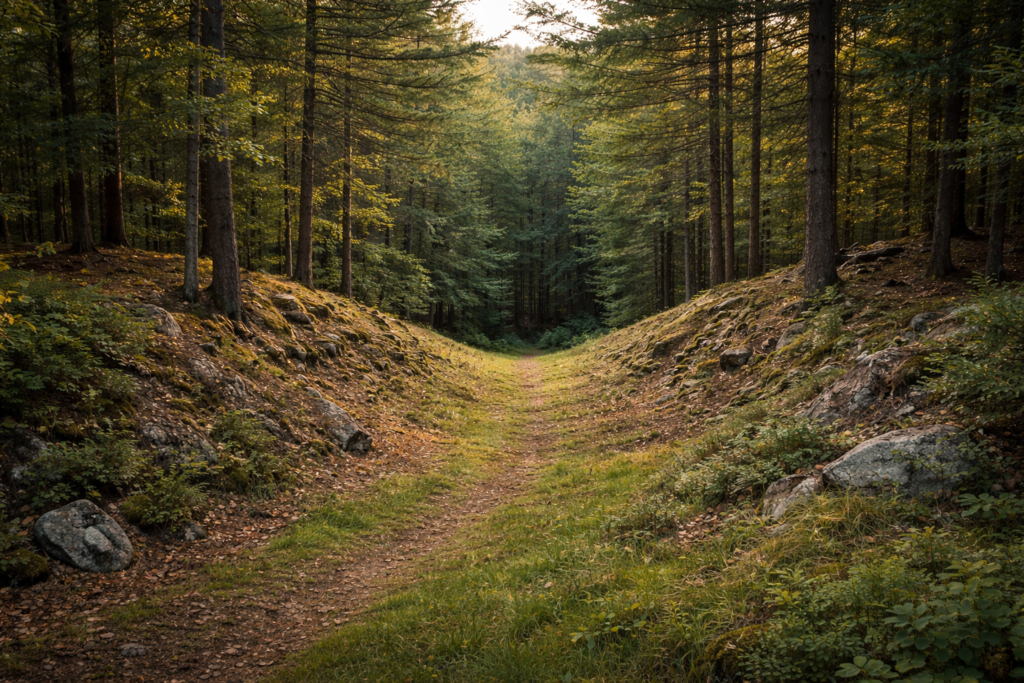
Saddles are one of the most talked-about terrain features in deer hunting. Many hunters hear that saddles funnel deer movement and assume they should automatically hang a stand there.
But knowing how to hunt saddles with a tree stand requires more than simply finding a low point between two ridges. Terrain steepness, deer sign, wind direction, and the time of day all influence whether a saddle will actually produce deer movement.
When hunters understand how these factors work together, saddles can become some of the most reliable stand locations in hill country. If you are new to tree stand strategy, check out How to Choose Where to Place a Tree Stand
What Is a Saddle in Deer Hunting
A saddle is a low point between two higher elevations along a ridge system. From a terrain perspective, it appears as a shallow dip between two hills or ridge peaks.
Because saddles provide an easier crossing point between ridges, deer often travel through them while moving across hill country.
However, not every saddle receives consistent deer traffic. The surrounding terrain and deer travel patterns determine whether the saddle actually becomes a travel funnel.
Why Steep Ridges Make Saddles More Productive
In my experience, saddles become much more important when the ridges on both sides are steep.
If deer can easily cross the ridge anywhere, there’s no real reason for them to use the saddle consistently. But when terrain becomes steep or difficult to travel, deer usually choose the path that requires the least effort.
In those situations, the saddle becomes the most logical crossing point and begins to concentrate deer movement.
Understanding how terrain shapes travel routes is one of the most important skills hunters can develop.
Understanding Deer Movement (What Actually Matters and What Doesn’t) is a great read to help you understand this deeper.
Always Look for Deer Sign First
Even when a saddle looks perfect on a map, I never assume deer are using it until I find sign on the ground.
Tracks, trails, droppings, and rubbed trees can all confirm that deer are actually traveling through the area. Without that confirmation, a saddle is simply a terrain feature that looks promising.
Scouting allows hunters to determine whether a saddle is part of a consistent travel route. I discuss this in great length in How to Scout for Deer: A Beginner’s Guide to What Actually Matters
Finding fresh deer sign around the saddle often confirms that deer are using the terrain the way you expect.
Choosing the Right Tree for a Saddle Stand
When learning how to hunt saddles with a tree stand, the goal isn’t always to hang the stand directly in the middle of the saddle.
Instead, many hunters place their stand slightly off the main crossing so deer move naturally through the saddle without detecting movement or scent from the stand.
Look for trees that provide:
• background cover to break up your outline
• clear shooting lanes toward the crossing
• safe climbing conditions
• appropriate stand height
Positioning the stand slightly off the primary travel route often allows deer to pass within range without noticing the hunter.
Morning vs Evening Saddle Hunts
Another factor I always consider before hunting a saddle is whether I’m planning a morning hunt or an evening hunt.
Deer movement often follows predictable patterns between bedding areas and feeding areas.
During the morning, deer are usually returning toward bedding cover after feeding overnight. In the evening, they begin moving toward food sources as daylight fades.
If a saddle connects bedding areas to feeding areas, it may work well during both time periods. But if it primarily connects bedding cover to deeper timber, it may be more productive during morning hunts when deer are returning to bed.
Understanding these movement patterns helps determine whether a saddle is worth hunting during a specific time of day.
Wind Direction and Saddle Hunting
Wind direction plays a major role in deciding whether to hunt a saddle.
Because saddles often sit between ridges, wind currents can shift unpredictably as air moves through the terrain. Hunters should position their stands so wind carries scent away from approaching deer.
Thermals can also influence how scent travels through hill country, especially during early morning and evening temperature changes.
Understanding wind and thermals helps hunters avoid alerting deer as they approach the saddle crossing. I talk about this more in, How Wind Direction Affects Deer Movement (And How to Hunt It Correctly)
Access Routes Matter
Even a well-placed stand can fail if hunters alert deer while entering the area.
Approach routes should avoid crossing major travel paths and should allow hunters to reach the stand without pushing scent through the saddle itself.
Using terrain features like creek bottoms, benches, or the backside of ridges can help hunters approach quietly.
Gear That Helps When Hunting Saddles
Saddle hunting locations are often found in hill country where lightweight gear can make a big difference.
Many hunters prefer hang-on tree stands because they allow flexible placement in terrain funnels like saddles.
Climbing sticks or mobile climbing stands can help hunters reach safe stand heights in uneven terrain.
Safety harnesses should always be worn when hunting from elevated stands.
How to Hunt a Saddle for Deer
Hunting a saddle successfully usually comes down to recognizing when that terrain feature truly funnels deer movement.
When ridges on both sides of the saddle are steep, deer often choose the saddle because it provides the easiest crossing point. This concentrates movement and creates a predictable travel corridor.
However, terrain alone isn’t enough. Hunters should confirm that deer are using the saddle by looking for fresh sign.
Once an active saddle is identified, hunters can improve their success by:
• setting up slightly off the main crossing
• choosing a tree that offers cover and shooting lanes
• approaching the stand with the wind in their favor
• considering whether the saddle fits morning or evening deer movement
Combining terrain, deer sign, wind direction, and timing helps determine when a saddle becomes a productive stand location.
Saddle Hunting FAQ
Why do deer travel through saddles?
Saddles provide the easiest route across ridge systems, especially when surrounding terrain is steep.
Should you hang a tree stand directly in the saddle?
Most hunters place their stands slightly off the crossing so deer travel naturally through the saddle.
Are saddles better for morning or evening hunts?
That depends on how deer use the terrain. Saddles near bedding cover often produce better morning movement, while saddles connecting feeding areas may work well in the evening.
How far from the saddle should you place a tree stand?
Many hunters position their stand about 15–30 yards off the main crossing trail to allow a clear shot without being directly on the travel route.
Final Thoughts
Learning how to hunt saddles with a tree stand involves more than simply locating a low point between ridges.
Steep terrain that limits crossing locations, visible deer sign, favorable wind direction, and the right time of day all influence whether a saddle will actually produce deer movement.
When these pieces come together, saddles can become some of the most consistent stand locations in hill country. The key is learning How to Choose Where to Place a Tree Stand.