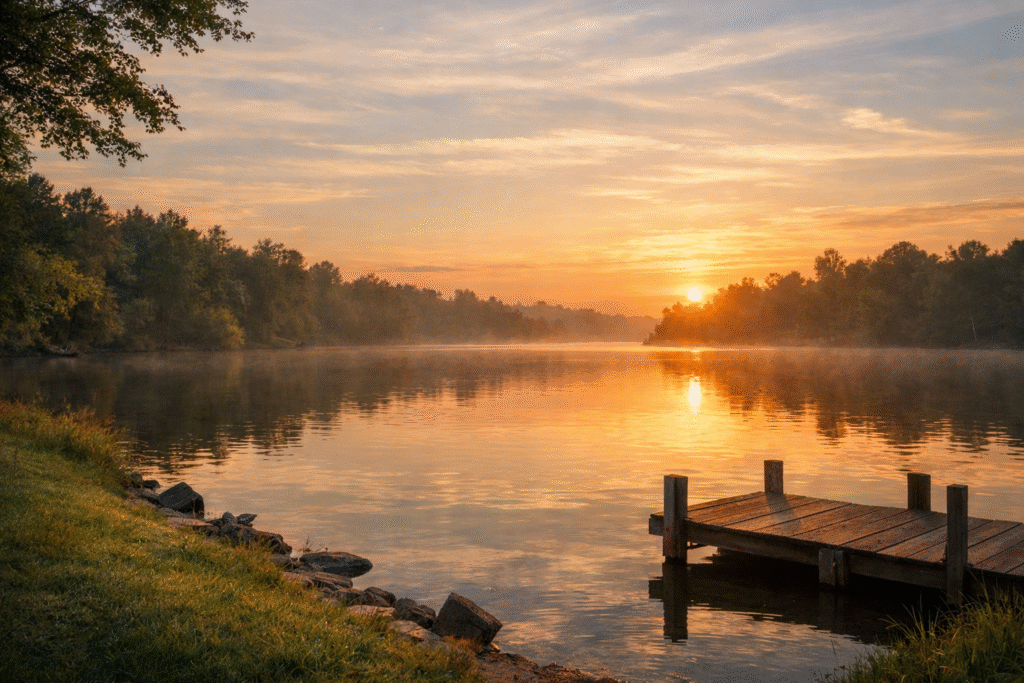
If you’ve only ever fished with a buddy who already knew where to go — or you’re trying to teach your kids to fish for the first time — this article is for you.
One of the most overwhelming parts of getting started isn’t the rod, the bait, or even how to cast.
It’s answering a simple question:
Where do I actually go fishing?
The key is to keep it simple.
And while that sounds easy, choosing a place to fish can feel harder than it should — especially when you want the experience to be positive, relaxed, and worth the time.
Why Location Matters More Than People Realize
Beginners often blame themselves when fishing doesn’t go well.
They think:
- They did something wrong
- They picked the wrong bait
- They don’t know enough yet
But many times, the issue isn’t how they’re fishing.
It’s where.
A good location increases your odds before you ever make a cast. And when you’re new — or fishing with kids — higher odds matter. Not because success has to be guaranteed, but because early confidence keeps people coming back.
Start With Public Fishing Areas (And Why They Work)
Where I live now, in Georgia, the simplest way to find a place to fish is a quick search:
“Public places to fish near me.”
That search usually brings up:
- WMAs (Wildlife Management Areas)
- PFAs (Public Fishing Areas)
- State-managed lakes, ponds, or access points
The names may change depending on your state, but the idea is the same everywhere.
These areas are managed.
That matters.
What “Managed” Really Means for Beginners
When a fishing area is managed by the state, a few important things are usually true:
- The water is intentionally maintained
- Fish populations are monitored
- Habitat is designed to help fish thrive
- Banks are often maintained for access
- There are multiple spots to spread people out
In simple terms, these places are built for fishing to work.
That doesn’t mean you’ll catch a fish every time — but it does mean you’re fishing somewhere designed to give you a fair chance.
Why Public Fishing Areas Are Ideal for Kids
Public fishing areas are especially helpful when kids are involved.
Kids lose focus quickly — and that’s normal.
When I take my son fishing, it’s very common for us to:
- Cast our lines
- Throw a ball
- Sit down and eat
- Watch the water
- Talk
- Then fish again
Keeping a child’s attention locked on fishing alone rarely happens — and it shouldn’t be forced.
Public fishing areas help because:
- There’s room to move
- There are clear banks
- You’re not worried about trespassing
- You’re not rushed
- You’re usually close to the water
Many of these places are also stocked, which increases the odds of action — and action helps create memories.
Stocked Water Isn’t Cheating — It’s a Learning Tool
Some people look down on stocked fishing areas.
They shouldn’t.
Stocked lakes and ponds exist to:
- Introduce people to fishing
- Help kids experience success
- Build confidence
- Encourage outdoor participation
For beginners and families, stocked water serves a purpose.
Catching a fish early doesn’t ruin the experience — it often sparks a lifelong interest.
And that’s a good thing.
Don’t Overthink “Secret Spots”
One of the biggest myths in fishing is that you need a secret spot to succeed.
You don’t.
Especially early on.
Highly pressured water can still produce fish — particularly if it’s managed well. What matters more is:
- Accessibility
- Comfort
- Safety
- Time on the water
A visible, legal, easy-to-reach fishing area is far better than a hidden spot that adds stress and uncertainty.
Look for Easy Access First
When choosing a fishing spot, prioritize:
- Parking nearby
- Clear walking paths
- Stable banks
- Open shoreline
These things reduce stress — especially with kids.
If you’re constantly worried about footing, distance, or access, the experience stops being enjoyable.
Simple access keeps the focus on the moment.
Rivers and Creeks Can Work — But Start Small
Rivers and creeks can be excellent fishing spots, but they often require more awareness:
- Changing water levels
- Current
- Slippery banks
- Limited casting room
For beginners, calm ponds and lakes are often better places to start.
Once confidence grows, branching out becomes more enjoyable.
Ask Locally (Without Overthinking It)
Local bait shops, park offices, or state wildlife websites often list:
- Fishing locations
- Access points
- Regulations
- Stocking schedules
You don’t need insider information — just basic guidance.
Most people are willing to help if you ask respectfully.
Remember the Goal
The goal isn’t to find the perfect spot.
The goal is to find:
- A legal place
- A safe place
- A comfortable place
- A place where fish live
That’s it.
Once you’re there, fishing will teach you the rest.
Keep It Simple
If you remember nothing else, remember this:
Start with public fishing areas.
Choose comfort over secrecy.
Pick access over complexity.
Let kids be kids.
Let fishing unfold naturally.
The water doesn’t need to be perfect.
It just needs to give you a place to begin.
And once you begin, everything else comes with time.