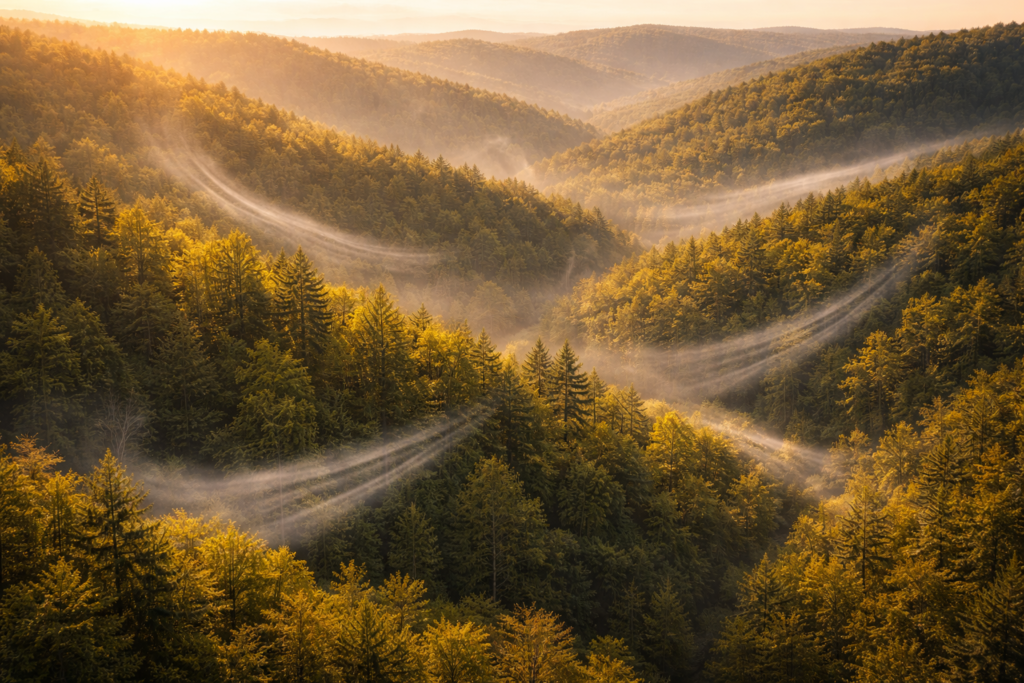
If you’ve ever had a deer blow at you even though the wind seemed perfect, thermals were probably involved.
Most hunters focus on wind direction when planning a hunt. But in hill country and broken terrain, thermals often matter just as much — sometimes more.
Thermals are air currents created by temperature changes in the landscape. As the ground warms or cools, air begins to rise or sink, and that movement carries scent with it.
Understanding thermals in deer hunting is really about understanding where your scent travels.
Once you start paying attention to thermals, the woods begin to make much more sense. Simply understanding how thermals affect deer hunting could change the way you hunt and increase your odds of success.
What Are Thermals in Deer Hunting?
Thermals are air currents created by heating and cooling ground temperatures.
When the sun warms the earth during the day, warm air rises. When the ground cools later in the evening, cooler air becomes heavier and sinks.
In areas with hills, ridges, benches, and valleys, thermals usually follow the terrain.
Instead of moving randomly, air often travels uphill or downhill depending on the time of day.
This is why thermals play such an important role in deer hunting scent control.
Many hunters believe the wind is in their favor, only to discover their scent has quietly drifted down a slope or uphill toward approaching deer.
How Wind Direction Affects Deer Movement (And How to Hunt It Correctly)
Morning Thermals: Warm Air Rising
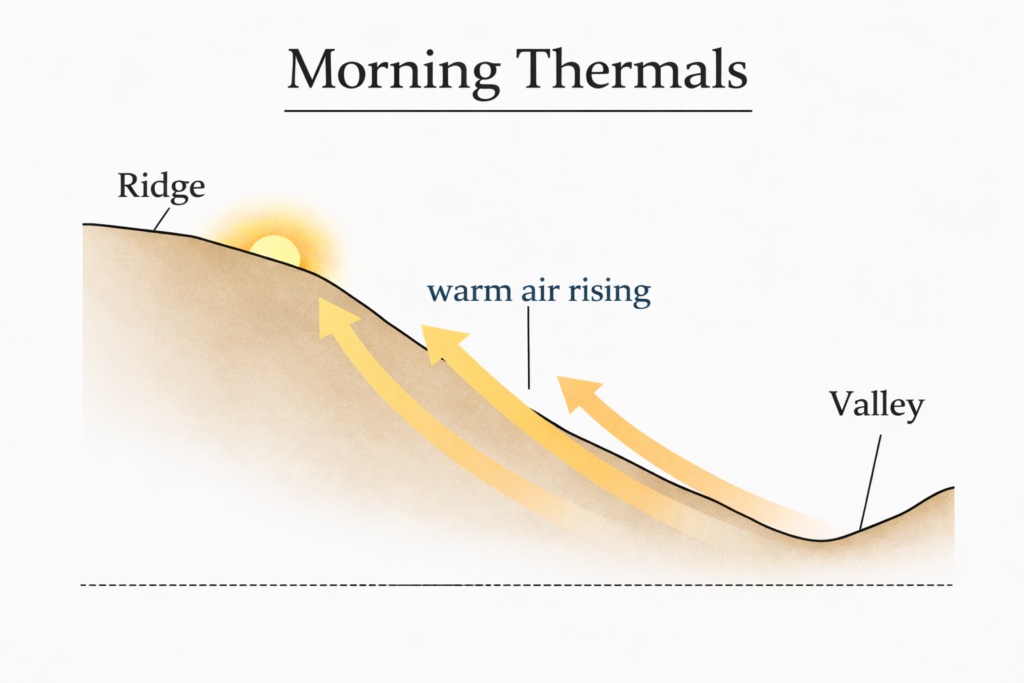
In the morning, sunlight begins warming the ground.
As the ground warms, the air above it warms as well. Warm air becomes lighter and begins to rise uphill.
These rising air currents are called morning thermals.
For hunters, this means scent often moves from the valley toward higher terrain during the early part of the day.
If you’re hunting lower elevations at sunrise, your scent may slowly drift uphill as the morning progresses.
Experienced hunters pay attention to how quickly a slope warms and where the first sunlight touches the terrain.
South-facing slopes often warm faster, which can cause thermals to begin rising earlier in the day. Because scent rises with morning thermals, hunters watching a valley often position themselves higher on the slope, so their scent continues drifting uphill behind them instead of dropping into the valley.
Evening Thermals: Cool Air Draining Downhill
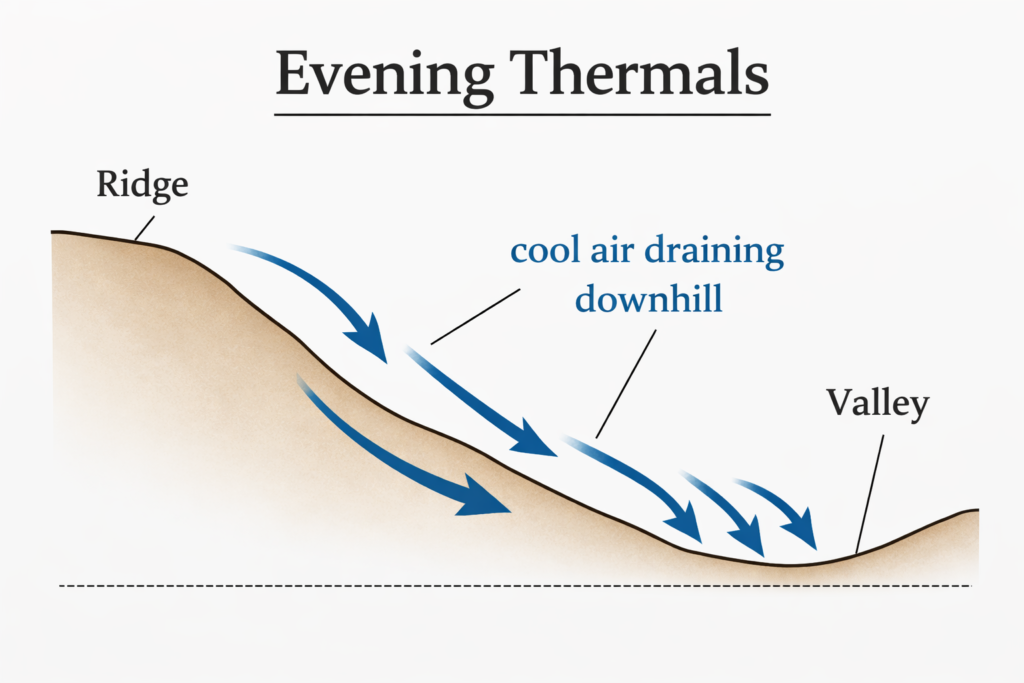
As evening approaches and the ground begins cooling, the air near the surface cools as well.
Cool air is heavier than warm air, so it begins to sink and flow downhill.
These are called evening thermals.
During this time of day, scent tends to move from ridges down toward valleys.
This is why hunters positioned high on a ridge in the evening sometimes notice their scent drifting downhill.
Cool air often collects in lower terrain, which is why valleys sometimes hold scent longer than expected.
Many experienced hunters use this predictable airflow to help keep their scent drifting below approaching deer. In the evening, when cool air begins draining downhill, hunters watching a valley often sit low on the slope or level with the travel route so falling thermals carry scent below approaching deer.
Wind vs Thermals in Deer Hunting
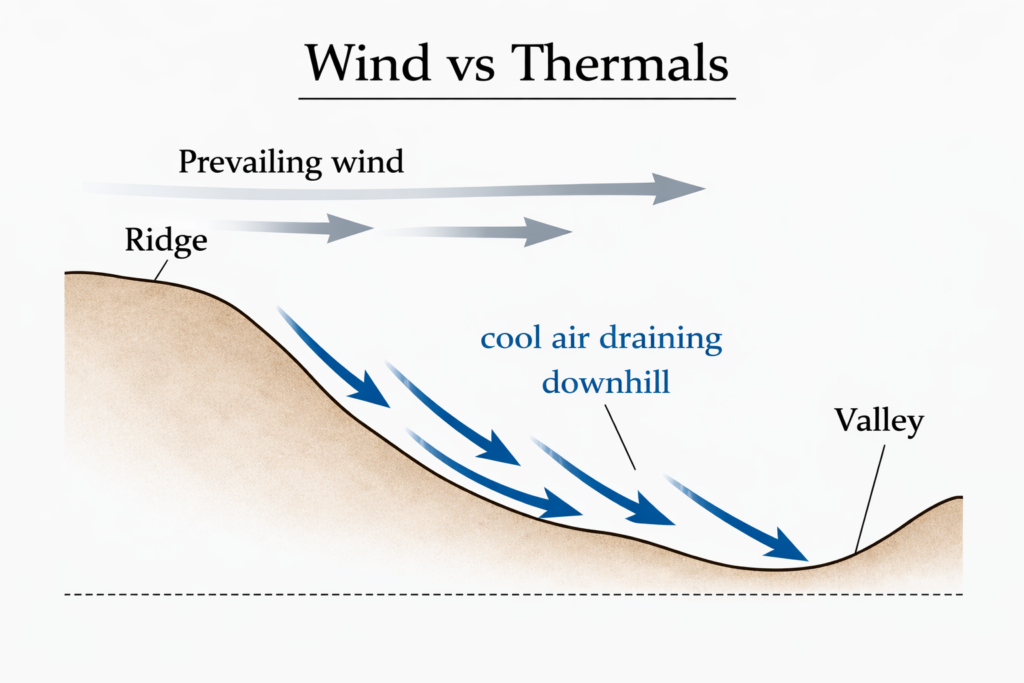
Wind and thermals are two different types of air movement.
Wind usually moves across the landscape, while thermals move up or down slopes depending on temperature.
In many hunting situations, both are happening at the same time.
That means scent may move:
• across terrain with the wind
• downhill with cooling thermals
• uphill with rising thermals
• or a combination of both
This interaction is why hunters often experience swirling winds in hill country.
If you’ve ever had deer approach from downwind even though the forecast said the wind was favorable, thermals were likely part of the reason.
How Wind and Thermals Affect Tree Stand Placement
Why Thermals Are Strongest in Hill Country
Thermals are most noticeable in areas with elevation change.
Ridges, valleys, benches, and saddles all influence how air moves through the landscape.
Flat terrain tends to produce weaker thermal patterns, but in hill country airflow often becomes much more predictable.
Warm air rises along slopes during the morning while cooler air drains downhill later in the day.
This predictable movement is one reason deer often travel terrain features like sidehills, benches, and ridge edges.
Hunters who understand thermals begin to see how deer use terrain to their advantage.
How Hunters Read Thermals in the Woods
One of the easiest ways to understand thermals is simply to watch how air moves around you.
Because thermals can shift quietly, many hunters use simple wind indicator to actually watch the air movement.
These lightweight powders float easily in the air and reveal subtle airflow changes that are otherwise impossible to see.
Over time, observing airflow patterns teaches hunters far more about thermals than any weather forecast alone.
Thermals and Ground Hunting
Thermals become especially important when hunting from the ground.
Without elevation from a tree stand, hunters are often positioned directly within the airflow path.
In hilly terrain, this means scent may travel quickly uphill in the morning or downhill in the evening depending on the terrain.
Ground hunters who pay attention to thermals often choose positions where airflow will naturally move scent away from expected deer travel routes.
Understanding how thermals move through terrain can make ground hunting far more effective.
How to Choose Where to Place a Tree Stand (Using Terrain, Wind, and Deer Movement)
Why Thermals Matter for Deer Movement
Deer rely heavily on their sense of smell.
When human scent drifts into an area where deer are traveling, they often detect it long before the hunter ever sees them.
Understanding thermals helps hunters predict:
• where scent may drift
• how air moves through ridges and valleys
• why deer sometimes approach from unexpected directions
Learning to read thermals is one of the most valuable skills a hunter can develop.
Many experienced hunters eventually realize that learning to read thermals is just as important as learning to read deer sign.
How to Scout for Deer: A Beginner’s Guide to What Actually Matters
Frequently Asked Questions
What are thermals in deer hunting?
Thermals are air currents created by temperature changes in the landscape. As the ground warms, air rises uphill. As the ground cools, air sinks and flows downhill.
How do thermals affect deer hunting?
Thermals influence how scent moves through terrain. Rising thermals in the morning often carry scent uphill, while evening thermals typically move scent downhill toward valleys.
Are thermals stronger than wind?
Thermals do not replace wind, but they interact with it. In hilly terrain, thermals can significantly influence scent movement even when the wind appears favorable.
Final Thoughts
Wind direction will always matter when hunting.
But wind alone doesn’t tell the whole story.
Terrain, temperature changes, and thermals constantly influence how air moves through the woods.
Once hunters begin recognizing these patterns, they often start noticing why certain stand locations work better than others.
For a deeper look at how terrain influences deer behavior, you may also want to read:
Understanding Deer Movement: What Actually Matters
The more time you spend watching how air moves through the landscape, the easier it becomes to predict how deer move through it as well.