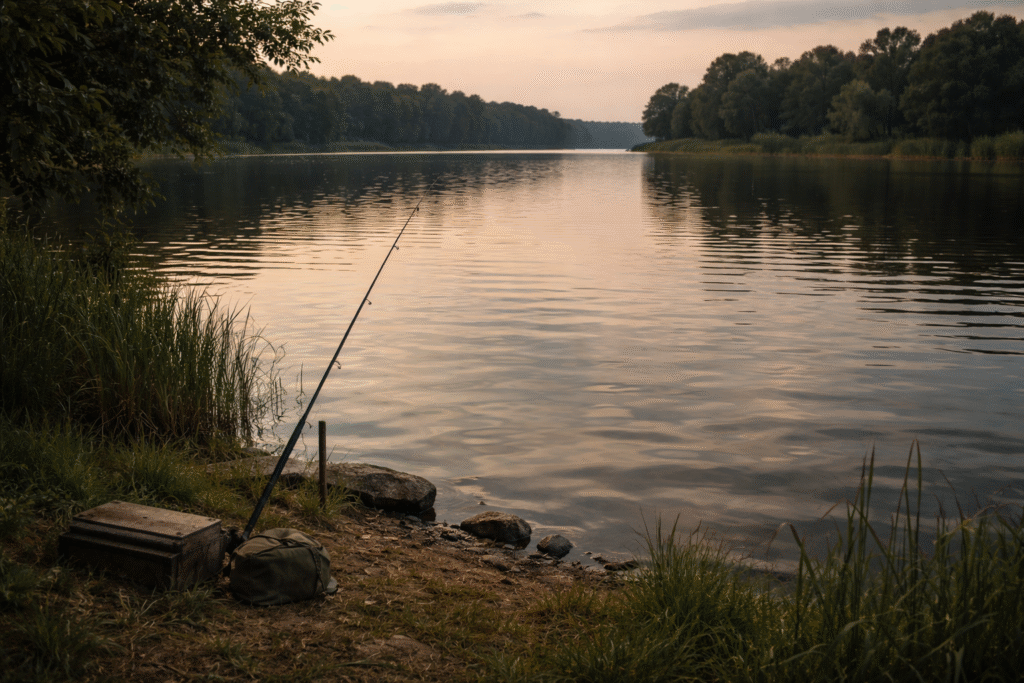
There used to be a small lake I would ride my bike to as a kid.
Every single person I ever talked about where I was heading would joke that the place didn’t have any fish. It was overlooked. Forgotten. Not taken seriously by anyone who knew better water existed somewhere else.
But I kept going anyway — mostly because it was close to home.
At first, nothing happened.
No catches. No proof. Just time spent casting and waiting.
Fishing isn’t about catching fish every time
And I kept coming back.
Familiarity Starts Before Understanding
When you fish the same place often enough, you stop expecting it to impress you.
Instead of wondering whether it’s good water, you begin noticing how it behaves.
The beginner lessons everyone must learn
I started to see that different areas came alive at different times of day.
The water didn’t feel the same in the morning as it did in the evening.
Little details began to stand out — not all at once, but slowly.
The Water Reveals Itself Over Time
There was one small ledge in that lake I wouldn’t have noticed early on.
But after weeks of fishing there almost daily, patterns began to show themselves. In the evenings, when the light softened and the water settled, I would get hits if I fished deeper along that edge.
I didn’t suddenly understand fishing.
I was simply paying attention.
Small Adjustments Come From Familiarity
Over time, I began making small changes.
Not chasing something new — just responding to what the water had already shown me. I adjusted depth. I adapted my approach. Nothing dramatic. Nothing rushed.
And eventually, after weeks of getting nothing, things changed.
Fish started showing up.
Some of the best fish I’ve ever caught came out of that little lake everyone laughed about.
The Real Lesson Wasn’t the Fish
That lake taught me something long before it gave me results.
It taught me that patience isn’t passive.
That effort matters even when nothing is returned right away.
That consistency builds understanding.
That being willing to adapt matters more than being right.
Most of all, it showed me that depth, temperature, structure, and timing aren’t separate ideas. They work together — and they reveal themselves slowly to anyone willing to keep showing up.
Those lessons became the foundation for every fishing decision I’ve made since.
Why Familiar Water Matters
Fishing new places is exciting. It feels full of possibility.
But familiar water teaches something deeper.
It teaches you what to expect — not because you’ve mastered it, but because you’ve listened long enough to recognize its patterns.
And once you’ve learned that kind of patience and awareness in one place, you carry it with you everywhere else you fish.