So, you’ve decided to give fishing a shot.
That alone deserves credit.
Trying something new — especially something outdoors and skill-based — comes with quiet uncertainty. It’s not just about catching fish. It’s about figuring out what to bring, where to go, and whether you’re doing it right.
I’ve been fishing as far back as I can remember. But when I transitioned from being a kid fishing with my dad to heading out on my own, it felt like starting over.
What do I bring?
Where do I fish?
Why aren’t they biting?
Did I pick the wrong spot?
Those questions don’t come from laziness. They come from inexperience. And almost every beginner angler goes through it.
The good news?
Starting fishing doesn’t require nearly as much as you think.
If you’re looking for a simple, low-stress way to start fishing, this guide will walk you through it.
Why Fishing for Beginners Feels Overwhelming
Walking into a sporting goods store for the first time doesn’t feel like shopping.
It feels like learning a new language.
Rods labeled with unfamiliar specs.
Reels with different gear ratios.
Walls of lures in every color imaginable.
Packaging promising better results.
The fishing industry generates billions of dollars each year, and millions of Americans participate annually. There’s constant innovation — and constant marketing.
I’ve fallen for it myself.
But most beginner fishing frustration comes from three things:
• Too many gear options
• Not knowing how to choose a fishing spot
• Interpreting quiet water as failure
If that sounds familiar, you’re not alone. I talk more about that early frustration in Beginner Fishing Lessons Everyone Learns (And Why They Matter)
Fishing only feels complicated at the beginning because you’re still translating the basics.
Once you understand what actually matters, everything slows down.
What You Actually Need to Start Fishing
One of the most common beginner questions is:
“What gear do I need to start fishing?”
The honest answer?
Less than you think.
A simple beginner fishing setup looks like this:
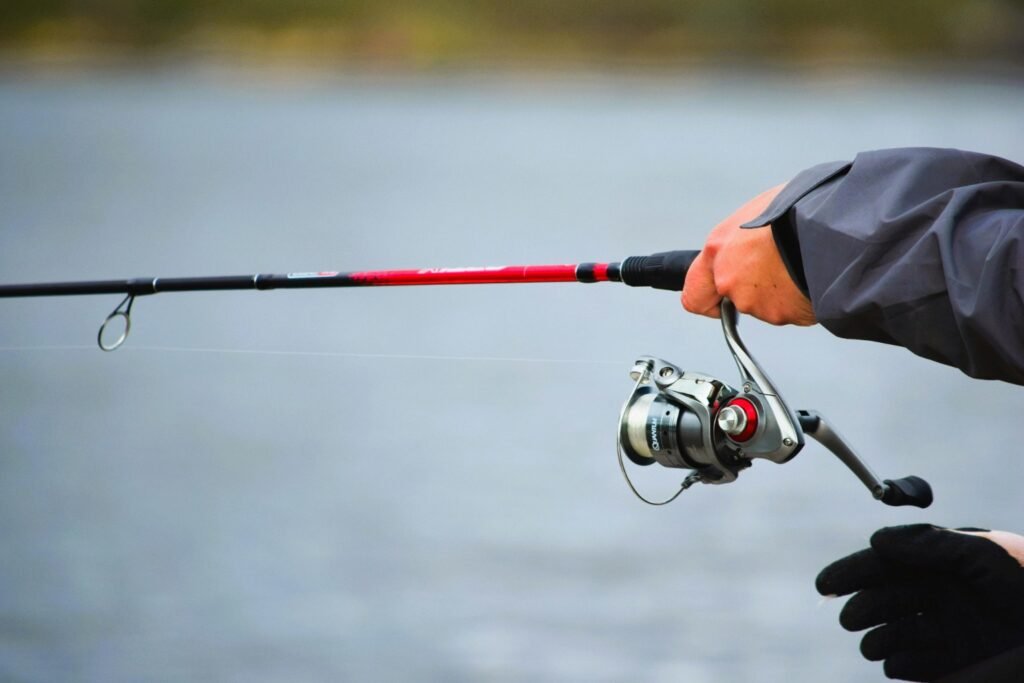
• A basic spinning rod and reel combo
• 10–12 lb. monofilament fishing line
• A small pack of hooks and sinkers
• A few versatile lures or live bait
• Needle-nose pliers
• Something comfortable to sit on
That’s it.
You don’t need five rods. You don’t need a massive tackle system. You don’t need every lure on the shelf.
In fact, too much beginner fishing gear often increases hesitation and second-guessing.
If you want a deeper breakdown of what to buy — and what to skip — see What You Actually Need to Start Fishing (And What You Don’t).
If you’re looking for a dependable starter option, a simple spinning combo like this one is more than enough. Not the “best.” Just reliable.
Reliable gear removes distraction. And distraction is what creates stress.
How to Choose a Fishing Spot Without Overthinking It
Another common question beginners ask:
“How do I know where to fish?”
You stand at the water’s edge analyzing everything.
Is it too shallow? Too deep? Too clear? Too muddy?
You start convincing yourself there’s one perfect spot — and if you don’t find it, you’ll fail.
Here’s the truth:
Fish relate to structure and transitions.
Look for:
• Fallen trees
• Rocks
• Docks
• Grass lines
• Areas where shallow water drops into deeper water
That’s enough to begin.
You don’t need advanced mapping. You don’t need years of experience. And you don’t need to move every ten minutes.
If you want to understand what shifts when you slow down instead of reacting, read Fishing Isn’t About Catching Fish Every Time.
Observation builds confidence. Overthinking builds anxiety.
Why It’s Called Fishing, Not Catching
If you search “why aren’t fish biting,” you’ll find dozens of technical answers.
Weather. Barometric pressure. Moon phase.
Those things can matter.
But for beginners, the bigger issue is interpretation.
Silence feels personal.
When I first started fishing alone, I assumed empty casts meant I was doing something wrong. So, I moved. Changed lures. Rushed decisions.
Eventually I realized I wasn’t failing — I was reacting.
I wrote more about that shift in. How to Choose a Fishing Spot When You Don’t Know Where to Start.
Fishing includes quiet stretches.
That’s not a flaw in your ability. It’s part of the experience.
When to Stay Put (And When to Move)
One of the hardest beginner fishing skills is knowing when to relocate.
If you stay too long, you worry you’re wasting time. If you move too quickly, you never gather information.
Try this simple framework:
• Cast at different angles before relocating
• Change retrieve speed
• Adjust depth
• Stay long enough to learn something
Movement should come from information — not discomfort.
If you find yourself constantly adjusting without understanding why, you may relate to Learning Was Never the Problem — Interpretation Was.
Patience isn’t inactivity. It’s controlled decision-making.
Gear That Reduces Frustration
Beginner frustration often comes from preventable equipment issues:
• Line twist
• Weak knots
• Dull hooks
• Rough drag systems
Good beginner fishing gear doesn’t guarantee more fish.
It reduces mental load.
A quality monofilament line like this one isn’t about performance hype. It’s about consistency.
Fewer problems = less frustration.
Less frustration = more time actually learning.
A Simple Plan to Start Fishing This Week
If you’re brand new and wondering how to start fishing without stress, here’s your plan:
Pick one accessible lake or pond.
Bring one rod.
Bring minimal tackle.
Fish for 1–2 hours.
Leave before frustration builds.
Go again next week.
That’s it.
Fishing for beginners, especially with kids doesn’t need to feel overwhelming.
It only becomes complicated when we assume it has to be.
Start simple. Stay consistent. Let experience teach you.
Eventually, you won’t need to search “how to start fishing.”
You’ll already know.
Frequently Asked Questions About Fishing for Beginners
What is the easiest way to start fishing?
The easiest way to start fishing is with a simple spinning rod and reel combo, basic monofilament line, and either live bait or one versatile lure. Focus on learning one body of water instead of trying everything at once.
What fishing gear does a beginner really need?
A beginner fishing setup only requires a rod and reel, line, hooks, sinkers, pliers, and minimal tackle. Extra gear can be added later once confidence and skill increase.
How long should beginners fish before moving spots?
Give a spot enough time to test different angles, depths, and retrieve speeds before relocating. Move based on information gathered — not impatience.
Is fishing hard for beginners?
Fishing can feel difficult at first because of unfamiliar equipment and expectations. When simplified, it becomes much more approachable. Confidence builds with repetition.