One of the most common questions new anglers ask is:
What bait or lure should I use when fishing?
Walk into any fishing store and you’ll see shelves filled with worms, minnows, soft plastics, crankbaits, spinners, jigs, and dozens of other options. For someone just getting started, it can feel overwhelming.
The good news is that most fishing baits and lures fall into a few simple categories. Once you understand how these categories work, choosing the right option becomes much easier.
This guide explains the main types of fishing bait and lures, how they work, and which ones are best for beginners.
If you’re still building your basic setup, this guide on [Fishing for Beginners — A Simple, Stress-Free Way to Start] explains the gear and equipment needed before choosing bait.
Bait vs Lures: What’s the Difference?
Before looking at the different types of fishing bait and lures, it helps to understand the difference between natural bait and artificial lures.
Fishing bait is typically something natural that fish already eat.
Examples include:
• worms
• minnows
• insects
• leeches
Natural bait works by attracting fish through scent, taste, and natural movement.
Fishing lures, on the other hand, are artificial. They are designed to imitate prey or trigger a fish’s instinct to strike.
Lures often use:
• movement in the water
• vibration
• color and flash
Both approaches work extremely well. Most anglers eventually use a combination of live bait and artificial lures depending on the conditions.
How Fish Find Food
Understanding how fish locate food helps explain why different fishing baits and lures work.
Fish rely on several senses when feeding:
Sight
Many species react to movement and flashes of color.
Smell
Fish such as catfish and carp rely heavily on scent to locate food.
Vibration
Fish detect water movement using a sensory system called the lateral line, which allows them to feel vibrations from prey.
This is why both natural bait and artificial lures can be effective. Some baits rely more on scent, while many lures trigger strikes through vibration and movement.
Live Bait
Live bait is one of the most effective and widely used fishing methods.
Because it is natural food for fish, it often works even when fish are not actively feeding.
Common types of live bait include:
• worms
• minnows
• crickets
• leeches
• insects
Live bait is commonly used for species like:
• bass
• trout
• panfish
• catfish
For beginners, live bait is often the easiest way to start catching fish quickly. If you are new to using live bait read, Live Bait for Fishing: Types and When to Use Them. Alot of people confuse live bait with Cut and Natural bait. I explain the differences here in, Cut and Natural Baits for Fishing: When to Use Liver, Fish, Chicken, and Corn
Dough Baits
Dough baits are soft mixtures designed to attract fish using strong scent.
They are especially popular for species that rely heavily on smell to find food.
Fish commonly caught using dough bait include:
• catfish
• carp
• trout
These baits are molded around the hook and slowly release scent into the water.
Prepared dough baits such as Trout Dough Bait are commonly used because they are easy to apply and release strong scent trails underwater. I go into dough baits in much more detail here, Dough Bait for Fishing: What They Are and When to Use Them
Soft Plastic Baits
Soft plastic baits are among the most versatile artificial fishing baits available.
They are made from flexible rubber-like material and designed to imitate natural prey.
Common soft plastic baits include:
• rubber worms
• crawfish imitations
• frogs
• lizards
• small baitfish shapes
Soft plastics are extremely popular in bass fishing but can catch many other freshwater species.
Because they move naturally in the water, they can be very effective when fished slowly around cover or structure.
I explain different soft plastic techniques in more detail here, Soft Plastic Baits for Fishing: Types and When to Use Them
Artificial Fishing Lures
Artificial lures use movement, vibration, and visual triggers to cause fish to strike.
Many types of fishing lures exist, but most fall into a few major categories.
Jigs
Jigs are weighted hooks often paired with skirts or soft plastic trailers. They can be fished slowly along the bottom and are very effective for bass and other freshwater fish.
Crankbaits
Crankbaits are hard-bodied lures designed to dive underwater when retrieved. They wobble and create vibration that attracts fish.
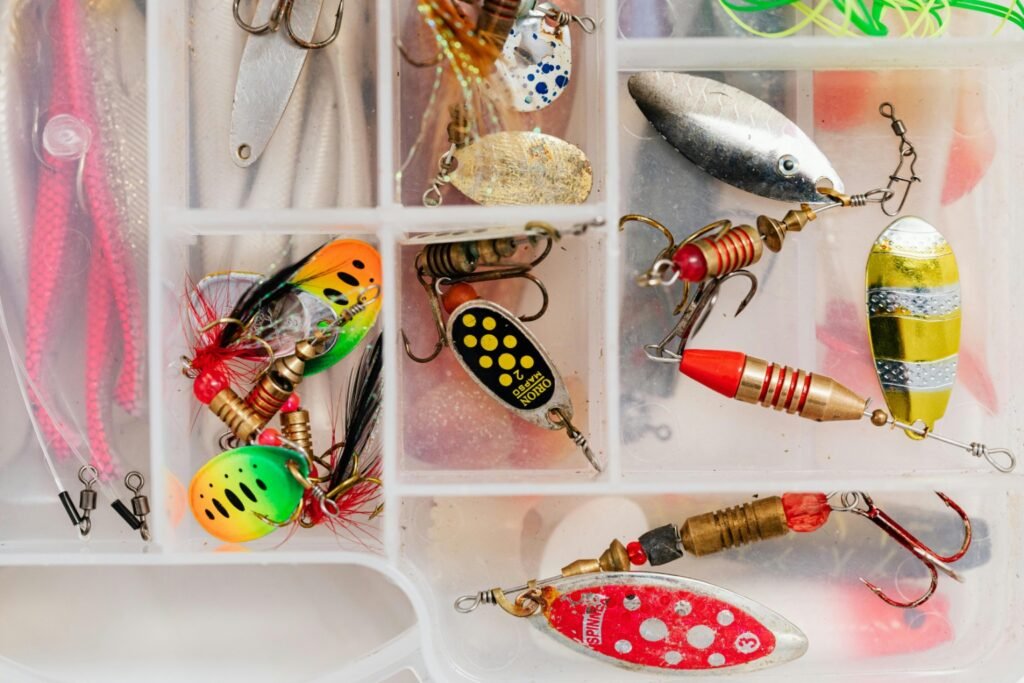
Spinners
Spinners use rotating metal blades to create flash and vibration in the water. They are effective for many freshwater species.
Topwater Lures
Topwater lures stay on the water’s surface and create splashing or popping action that triggers explosive strikes from fish.
Spoons
Spoons are metal lures that wobble through the water and reflect light, mimicking injured baitfish.
Flies
Flies are lightweight artificial insects used in fly fishing to imitate natural insect activity.
Each type of lure imitates different prey and is useful in different fishing situations. For a detailed breakdown read, Artificial Fishing Lures Explained: Types and When to Use Them
When to Use Bait vs Lures
Both bait and artificial lures catch fish, but they are often used in different situations.
Bait is often best when:
• fish are inactive
• water temperatures are cold
• scent is important
Because bait releases natural scent, it can attract fish even when they are not actively chasing prey.
Lures are often preferred when:
• covering water quickly
• searching for active fish
• fishing around structure or vegetation
Many experienced anglers carry both bait and lures and switch depending on the conditions.
Best Baits and Lures for Beginners
If you are just starting out, it’s best to keep things simple.
The easiest fishing baits and lures for beginners are:
Live worms
Worms attract many species and are easy to use.
Minnows
Minnows are very effective for many freshwater fish.
Simple soft plastic worms
Soft plastic worms are one of the most reliable artificial baits ever created and work well for many fishing situations.
Starting with these options allows beginners to focus on learning how fish behave rather than worrying about complicated lure techniques.
Why Understanding Fishing Baits and Lures Matters
Choosing the right bait or lure isn’t just about catching fish.
It’s about understanding how fish behave and what they eat.
Different fish respond to different prey, water conditions, and seasons.
Once you understand how fishing baits and lures work, adapting to different fishing situations becomes much easier.
Like most fishing skills, it improves with time and experience on the water.
Frequently Asked Questions
What are fishing baits and lures?
Fishing baits are natural food items such as worms or minnows used to attract fish. Fishing lures are artificial tools designed to imitate prey and trigger a fish’s instinct to strike.
What bait is best for beginner fishing?
Live worms are often the best bait for beginner fishing because they attract many species and are easy to use.
Are fishing lures better than bait?
Both methods work well. Bait often attracts fish using scent and natural movement, while lures rely on vibration, movement, and visual triggers to cause strikes.