My entire childhood outdoor experience was planned by adults.
Trips were organized. Gear was packed. Campsites were chosen. I showed up, helped where I was told, and spent the rest of the time doing what kids do—exploring, fishing, wandering, and sleeping well at the end of the day.
I didn’t realize how much of that structure I was borrowing until the first time I went camping alone.
I remember loading my gear into the car and pulling out of the driveway feeling confident. I’d been camping my whole life. I knew how everything worked. Nothing about it felt new.
That confidence lasted right up until I pulled into the campground.
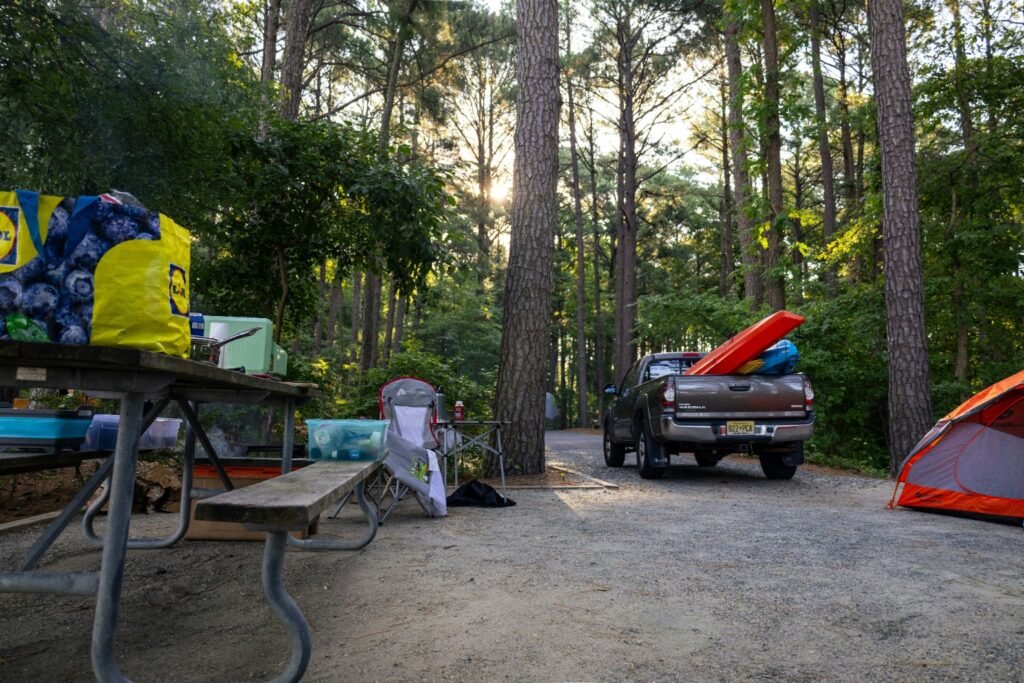
I backed into my site, shut off the engine, and stepped out of the car. I opened the hatch and started unloading—and that’s when it hit. A tightening in my chest. A quiet anxiety I had never really felt outdoors before.
I looked down and all I saw was a pile of stuff.
Not unfamiliar gear.
Not new equipment.
Just a big, messy pile.
I had used every piece of it countless times. But standing there alone on my first solo camping trip, it felt strangely overwhelming—like being a kid again, staring at a huge pile of laundry dumped on your bed, wondering what you’re supposed to do first.
So I did what most people do when they feel unsure.
I started grabbing random things.
I carried items back and forth without a plan. I set something down, picked it up again, moved it somewhere else. I opened bins I didn’t need yet. I started tasks I couldn’t finish because something else wasn’t in place.
Hours passed.
By the time everything was finally set up, I was still stressed. The sun was lower than I expected. I had planned to be fishing long before that. Instead, I felt behind—like I’d spent the entire afternoon working instead of arriving.
Nothing had gone wrong.
But nothing had gone right, either.
When Experience Isn’t Enough
That trip taught me something I didn’t fully understand at the time.
The problem wasn’t experience.
The problem wasn’t gear.
The problem was that I didn’t know what to do first.
This is the exact feeling I later learned to recognize as arrival chaos—the moment when a trip quietly starts to unravel before anything has actually gone wrong.
As a kid, that order was invisible. Adults handled it. As an adult camping alone, I was suddenly responsible for decisions I’d never had to make before—where to start, what mattered most, and what could wait.
Camping alone doesn’t just ask you to show up prepared.
It asks you to decide—over and over—what comes next.
And when you don’t have a sequence, even familiar things can feel heavy.
That anxious moment wasn’t about being unprepared.
It was about standing at the very beginning of a trip with no clear starting point.
Looking back, it had nothing to do with whether I brought the “right” gear—it had everything to do with what being prepared actually means when you’re the only one responsible for the outcome.
I didn’t know it then, but that feeling—right there in the first few minutes—was quietly setting the tone for the entire experience.
I’ve since learned that arrival isn’t something to rush through or power past. It’s a transition that deserves attention. When it’s handled poorly, everything downstream feels harder than it needs to.
When it’s handled well, the rest of the trip settles naturally.
That first solo camping trip didn’t ruin camping for me.
It taught me something more valuable.
The outdoors doesn’t get easier just because you’ve been there before.
It gets easier when you know what to do first.