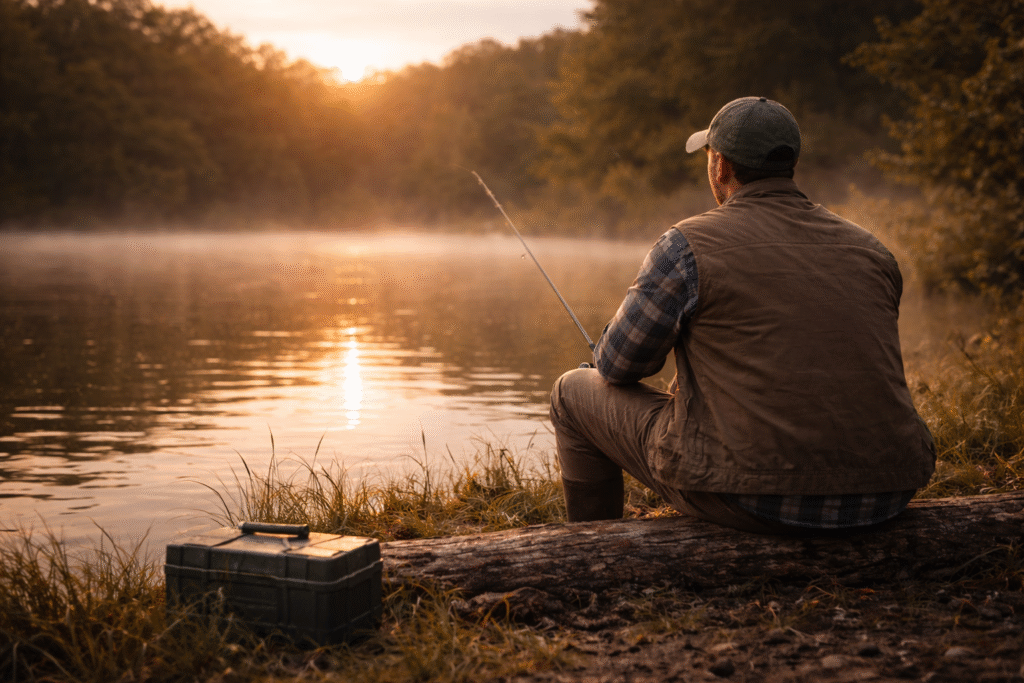
When I was younger, fishing with my dad, I’d mess something up.
Maybe I missed a bite.
Maybe I tangled my line.
Maybe I picked the wrong spot or rushed something I shouldn’t have.
I’d get frustrated. Sometimes I’d feel like I failed.
That’s when my dad would look at me and say:
“It’s only a mistake if you didn’t learn from it.”
That line stuck with me.
Not just in fishing — in life.
Because when you call something a mistake, it feels like an endpoint.
But when you call it a lesson, it becomes a step forward.
Even now, after more than 40 years of fishing, I’m still learning. And that’s exactly the point.
Fishing Isn’t About Avoiding Failure — It’s About Gaining Experience
One of the biggest misunderstandings beginners have about fishing is believing they need to “get it right” quickly.
They think:
- Catching fish equals success
- Not catching fish equals failure
But fishing has never worked that way.
Every seasoned angler you’ve ever met learned the same way — through time on the water, paying attention, and learning lesson after lesson along the way.
Fishing doesn’t reward perfection.
It rewards presence.
Lesson #1: Patience Comes Before Results
One of the first lessons fishing teaches is patience.
You can do everything “right” and still wait.
You can cast perfectly and still come up empty.
You can spend hours watching the water without a single bite.
That’s not failure — that’s fishing.
Learning to wait without frustration is a skill that carries far beyond the water. And it’s something you only learn by experiencing it firsthand.
Patience isn’t taught. It’s earned.
Lesson #2: Quiet Days Are Still Productive
Not every fishing trip feels exciting.
Some days are slow.
Some days are quiet.
Some days nothing happens at all.
But those days are often when you learn the most.
You notice how the water moves.
You notice where fish aren’t.
You notice patterns you missed before.
Fishing teaches you that productivity doesn’t always look busy — sometimes it looks calm.
Lesson #3: Simplicity Builds Confidence
Beginners often feel pressure to overthink everything.
They question:
- The spot
- The timing
- Their technique
- Every small decision
But fishing has a way of showing you that simplicity often works best.
The more time you spend on the water, the more you learn to trust your instincts. You stop chasing perfection and start focusing on what feels right.
Confidence doesn’t come from knowing everything.
It comes from learning through experience.
Lesson #4: Everyone Learns at Their Own Pace
Comparison is one of the fastest ways to lose joy in fishing.
Someone else always seems to be catching more.
Someone else always looks more confident.
Someone else always seems further along.
But fishing isn’t a race.
Everyone’s path looks different. Everyone learns in their own time. And every angler you admire once stood exactly where you are now.
The goal isn’t to catch up to anyone else — it’s to keep showing up.
Lesson #5: Awareness Matters More Than Results
Fishing sharpens awareness in ways few activities do.
When you slow down, you start noticing:
- Wind direction
- Light changes
- Water movement
- Wildlife nearby
These things matter — not just for catching fish, but for understanding the outdoors as a whole.
Fishing teaches you to observe before acting. To listen before reacting. To be present instead of rushed.
That awareness stays with you.
Lesson #6: You Never Stop Learning
This might be the most important lesson of all.
No matter how long you fish, you never “arrive.”
Conditions change.
Waters change.
You change.
Even after decades on the water, there’s always something new to learn — and that’s what keeps fishing meaningful.
If fishing ever stopped teaching you, it would lose its magic.
Why Calling Them “Lessons” Matters
Words shape how people feel.
When beginners believe they’re making mistakes, they feel discouraged.
When they realize they’re learning lessons, they feel progress.
If you make a mistake, it feels like you failed.
If you learn a lesson, it feels like the next step toward becoming a seasoned veteran.
That shift in mindset keeps people fishing — and growing — instead of giving up.
What a “Good Day” of Fishing Really Looks Like
Some days, a good day means fish on the line.
Other days, it means:
- Staying patient
- Learning something new
- Enjoying the quiet
- Leaving the water better than you arrived
Both kinds of days matter.
Fishing isn’t about avoiding lessons — it’s about collecting them.
Keep Showing Up
If you’re new to fishing, remember this:
You don’t need to be perfect.
You don’t need to know everything.
You don’t need instant success.
You just need to keep showing up — willing to learn.
Fishing will teach you what you need to know, one lesson at a time.
And years from now, you’ll look back and realize those lessons were never mistakes at all.