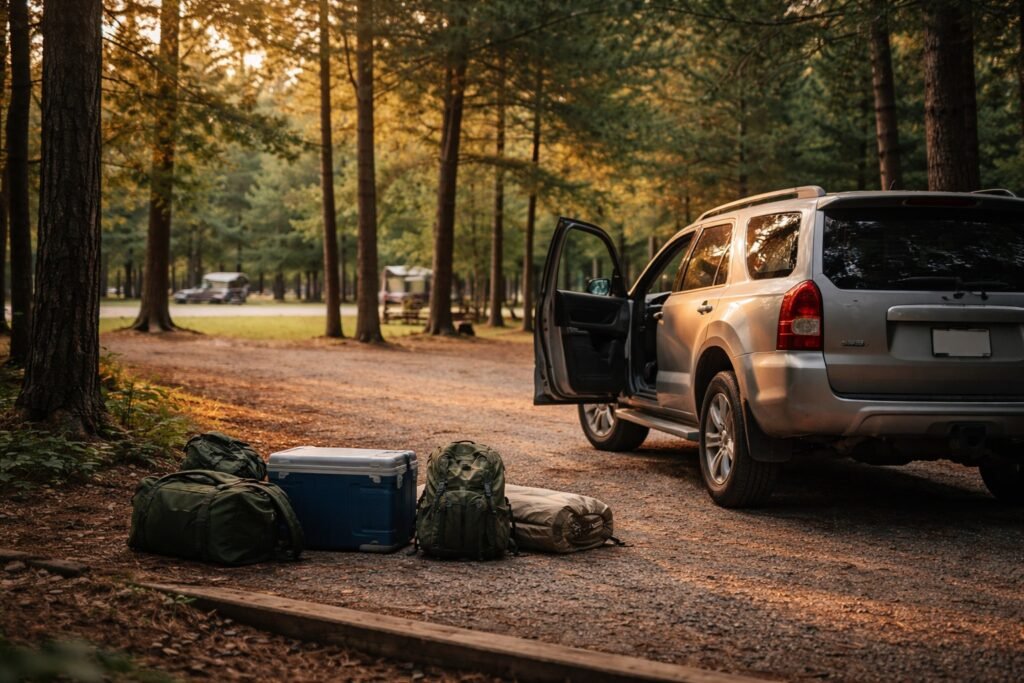
Arrival Chaos: Why the First 30 Minutes Decide the Entire Camping Trip
There is a moment when you are new to camping that feels like walking a tightrope.
It doesn’t happen while packing at home.
It doesn’t happen during the drive.
It happens when you arrive.
You pull into the campground. The engine shuts off. Gravel crunches under the tires. Trees close in. Other campsites pass by—some fully set up, some half packed, some quiet and empty. You scan site numbers, compare them to the reservation in your head, and finally slow down.
This is it.
Your spot.
And suddenly, everything feels fragile.
I’ve felt that moment more times than I can count. Even now, after years of camping, I recognize it immediately when it shows up.
I felt it again recently on a four-day trip with my son.
We pulled into the designated camping loop and drove slowly, looking for our site. At first, everything felt easy. We talked. We pointed things out. But the second we found our spot and stopped, that familiar pressure settled in.
The pressure to move fast.
The pressure to look like you know what you’re doing.
The pressure to “get set up” before something goes wrong.
Nothing was wrong yet — but everything felt like it could be.
That feeling has a name.
Arrival chaos.
Why Arrival Is the Most Unstable Moment of Any Trip
Most people assume camping stress comes from weather, missing gear, or poor planning.
In reality, most trips don’t unravel because of those things.
They unravel because the transition from everyday life to the outdoors is mishandled.
That transition happens immediately after arrival.
You move from:
- structure → uncertainty
- routine → improvisation
- familiar space → unfamiliar ground
At home, everything has a place.
On the road, everything has momentum.
At the campsite, momentum disappears.
Your brain suddenly has to create order from nothing — while everyone is tired, hungry, and unsure what to do next.
This is the same mental pressure many people feel when they mistake being prepared for being ready to act immediately.
The Invisible Clock That Starts the Moment You Park
There’s an unspoken timer that starts the second the car shuts off.
No one says it out loud — but everyone feels it.
You notice it when:
- other campers seem already settled
- daylight feels limited
- kids start wandering without direction
- gear piles up instead of disappearing
The clock isn’t real — but the urgency feels very real.
That urgency doesn’t come from the campground.
It comes from comparison.
You assume others are watching.
You assume you’re behind.
You assume speed equals competence.
It doesn’t.
The Performance Pressure of “Looking Like You Know What You’re Doing”
Camping culture doesn’t talk much about performance — but it exists.
You see it in:
- fast setups
- clean-looking campsites
- calm families unloading gear
Without realizing it, many new campers start performing instead of arriving.
That performance mindset is what turns arrival into chaos.
Rushing doesn’t reduce stress — it multiplies it.
A Four-Day Trip That Could Have Gone Sideways
On that recent trip with my son, I felt the urge to jump out of the truck immediately.
Four days is long enough that early decisions matter.
If you rush setup and place things poorly, you live with it.
I could feel myself wanting to power through arrival — just to get past the uncomfortable part.
But instead, I stopped.
Not in a dramatic way.
I didn’t announce anything or make it a lesson.
We just stayed seated for a moment.
I looked at the slope of the ground.
Where the light was coming from.
Where sound traveled.
Where people weren’t.
That pause mattered more than any single task.
It broke the spell of urgency.
Why Calm Is Faster Than Panic
I don’t camp fast.
What I rely on instead are familiar systems — not rigid rules, but patterns that reduce decision-making when it matters most.
Those systems don’t exist to save time.
They exist to protect calm.
That’s something I learned after years of overpacking, overthinking, and confusing preparation with confidence.
Because I didn’t rush, things actually moved faster.
The tent went where it made sense.
Gear stayed contained instead of scattered.
My son stayed engaged instead of overwhelmed.
That’s the paradox many new campers don’t expect:
Calm creates speed. Panic creates delay.
The Real Mistake New Campers Make at Arrival
Most new campers believe the goal of arrival is setup completion.
It isn’t.
The real goal is regaining a sense of control.
When people rush, it’s not excitement — it’s discomfort. They’re trying to outrun uncertainty.
That’s why rushed arrivals often lead to:
- misplaced tents
- repeated unloading
- short tempers
- lingering disorganization
The trip hasn’t gone wrong — but the tone has.
And tone matters more than perfection.
Why Kids Feel Arrival Chaos Immediately
Kids don’t know what to do at arrival — and they know they don’t know.
They look to adults for cues.
When adults rush:
- kids wander
- energy spikes
- uncertainty spreads
When adults slow down:
- kids settle
- roles emerge naturally
- confidence builds quietly
This is why camping with kids isn’t about managing behavior — it’s about managing energy during transition.
Arrival Is Not a Task — It’s a Transition
The most important shift this blog offers is simple:
Arrival is not something to power through.
Arrival is something to respect.
The first 30 minutes are a tone-setting window.
This is where:
- urgency turns into calm
- confusion turns into orientation
- confidence begins
Not later.
Not after dinner.
Not once everything is perfect.
Right here.
If You’re New, This Moment Is Coming — And That’s Okay
If you’re new to camping, you will feel this moment.
It doesn’t mean you’re unprepared.
It doesn’t mean you’re failing.
It doesn’t mean you shouldn’t be there.
It means you’ve reached the point where the trip becomes real.
Experienced campers aren’t immune to this moment — they’ve just learned how to move through it without panic.
Crossing the Tightrope
Every camping trip begins with uncertainty.
The tightrope moment is the threshold between everyday life and camp life.
Once you cross it:
- breathing slows
- decisions feel lighter
- the reason you came becomes clear
Camping confidence isn’t built by being faster or more prepared.
It’s built by slowing down at the exact moment most people rush.
If you’ve felt that arrival pressure before — or you’re worried you will — remember this:
Nothing is wrong yet.
You’re not behind.
You’re just arriving.