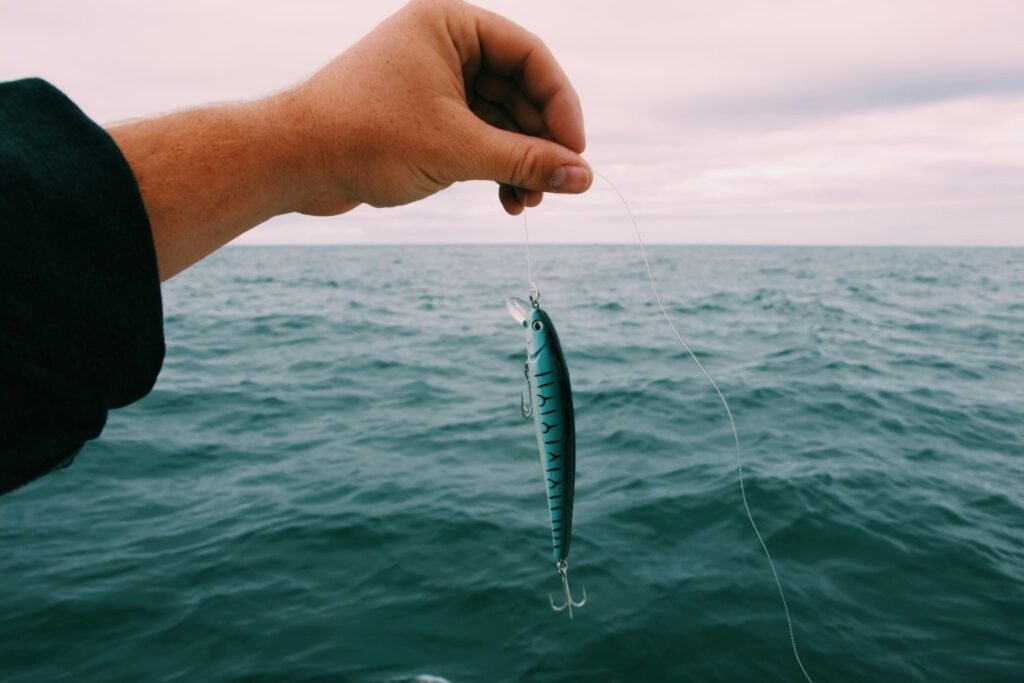
When people first start fishing, they often think of using worms, minnows, or other natural bait. These options work well because they provide scent and natural movement that fish recognize as food.
Artificial fishing lures take a different approach.
Instead of using real bait, anglers use man-made lures designed to imitate prey. These lures create motion, vibration, flash, or surface disturbance that triggers a fish’s instinct to strike.
While bait often relies on scent, lures rely more on presentation and movement. Anglers actively retrieve them through the water to imitate injured prey or fleeing food.
If you’re still learning how the major bait categories fit together, [Understanding Fishing Baits and Lures] explains how live bait, prepared bait, and artificial lures all play different roles in fishing.
This guide focuses on artificial fishing lures—what they are, how they work, and when anglers use them. If you are brand new to fishing I would suggest reading: Fishing for Beginners: A Simple, Stress-Free Way to Start
What Are Artificial Fishing Lures?
Artificial fishing lures are man-made baits designed to imitate the natural food fish normally eat.
Depending on the design, a lure may imitate:
• baitfish
• insects
• frogs
• crawfish
• small aquatic creatures
Lures are typically made from materials like plastic, metal, wood, or rubber. Many include features such as reflective finishes, rattles, skirts, or soft tails that help mimic the movement of real prey.
Unlike most bait fishing, lure fishing is active. Anglers cast the lure and retrieve it through the water in a way that imitates something alive.
The goal is to make the lure look like an easy meal or a fleeing prey item, which can trigger a fish’s instinct to strike.
Common Types of Fishing Lures
There are many types of fishing lures, but a few categories make up the majority of what anglers use.
Crankbaits
Crankbaits are hard-bodied lures designed to imitate small baitfish.
They usually have a plastic lip on the front that causes the lure to dive and wobble when retrieved. This wobbling motion mimics the movement of injured fish, which can trigger aggressive strikes.
[AL: crankbait fishing lure]
Crankbaits are often used to cover water and search for active fish.
Spinners and Spinnerbaits
Spinners and spinnerbaits create flash and vibration in the water.
These lures use metal blades that spin as the lure moves. The spinning blade reflects light and creates vibration that fish can detect through their lateral line.
This combination of flash and vibration makes spinner-style lures especially effective in stained or moving water.
Jigs
Jigs are one of the most versatile lures in fishing.
They consist of a weighted hook with a skirt or soft plastic body attached. Jigs are commonly used to imitate crawfish, baitfish, or other bottom-dwelling prey.
Anglers typically bounce or drag jigs along the bottom, making them useful around rocks, structure, and cover.
Topwater Lures
Topwater lures are designed to float and move across the surface of the water.
When retrieved, they create splashes, pops, or walking movements that imitate struggling prey.
Topwater fishing can produce some of the most exciting strikes because fish attack the lure on the surface.
Spoons
Spoons are simple metal lures shaped like a curved spoon.
As they move through the water, they wobble and flash, imitating injured baitfish. This motion makes them effective for species that hunt smaller fish.
Spoons are often used for trout, bass, and other predatory species.
Flies
Flies are lightweight artificial insects used in fly fishing.
They imitate insects that fish feed on at or near the water’s surface. While fly fishing uses specialized gear and techniques, the basic idea is the same: imitate natural prey.
When Artificial Lures Work Best
Artificial lures are especially useful in situations where anglers want to actively search for fish.
Some common situations where lures perform well include:
Covering Water Quickly
Lures allow anglers to cast, retrieve, and move to new spots quickly. This makes them ideal for searching large areas.
Triggering Reaction Strikes
Fish sometimes strike out of instinct rather than hunger. A fast-moving lure can trigger these reaction strikes.
Finding Active Fish
When fish are actively feeding, moving lures can imitate fleeing prey and draw aggressive strikes.
Fishing Around Structure and Cover
Lures are often used near rocks, fallen trees, vegetation, and other structures where fish hide.
Because anglers can control how a lure moves, they can experiment with different speeds and presentations to find what works best.
Artificial Lures vs Live Bait
Live bait and artificial lures attract fish in very different ways.
Live bait relies heavily on natural scent and movement. Worms, minnows, and other live baits naturally produce smell and movement that fish recognize.
Artificial lures rely more on visual triggers, vibration, and motion created by the angler.
Both methods can be very effective depending on the situation. If you’d like to learn more about natural bait options, see [Live Bait for Fishing: Types and When to Use Them].
Many anglers use both approaches depending on conditions.
Artificial Lures vs Dough Bait
Artificial lures are usually fished actively, meaning the angler retrieves the lure to imitate moving prey.
Dough bait is typically used very differently.
Instead of retrieving it, anglers often cast dough bait and allow it to sit in the water while scent spreads and attracts fish.
This difference makes dough bait a more passive style of fishing, while lure fishing is more active.
If you’re curious about prepared bait options, [Dough Baits for Fishing: What They Are and When to Use Them] explains how dough bait works and when anglers use it.
Choosing Your First Fishing Lures
For beginners, the wide variety of fishing lures can feel overwhelming.
The best approach is to start simple.
A few basic lures can cover many fishing situations:
• small spinner
• basic crankbait
• jig
• simple topwater lure
Many beginners start with a simple kit that includes a few different lure styles.
Once you get comfortable using a few types, you can slowly expand your tackle box with more specialized lures.
Fishing with lures becomes easier with experience as you learn how fish respond to different movements and presentations. You now have a basic understanding of what lures are. If you are ready to apply what you have learned on the water read: How to Catch Fish (What Actually Works for Beginners)
Frequently Asked Questions
What are artificial fishing lures used for?
Artificial fishing lures are used to imitate prey and trigger fish strikes. They create movement, vibration, flash, or surface disturbance that makes fish think the lure is food.
Are lures better than live bait?
Neither option is always better. Live bait often works well because of its natural scent, while lures are useful for covering water quickly and triggering reaction strikes.
What fishing lures should beginners start with?
Many beginners start with a few simple lures such as a small spinner, crankbait, jig, and topwater lure. These cover a wide range of fishing situations.
Do fishing lures actually look like real fish?
Some lures are designed to closely resemble real baitfish, while others simply imitate movement or vibration that fish recognize as prey. In many cases, the action of the lure matters more than perfect appearance.