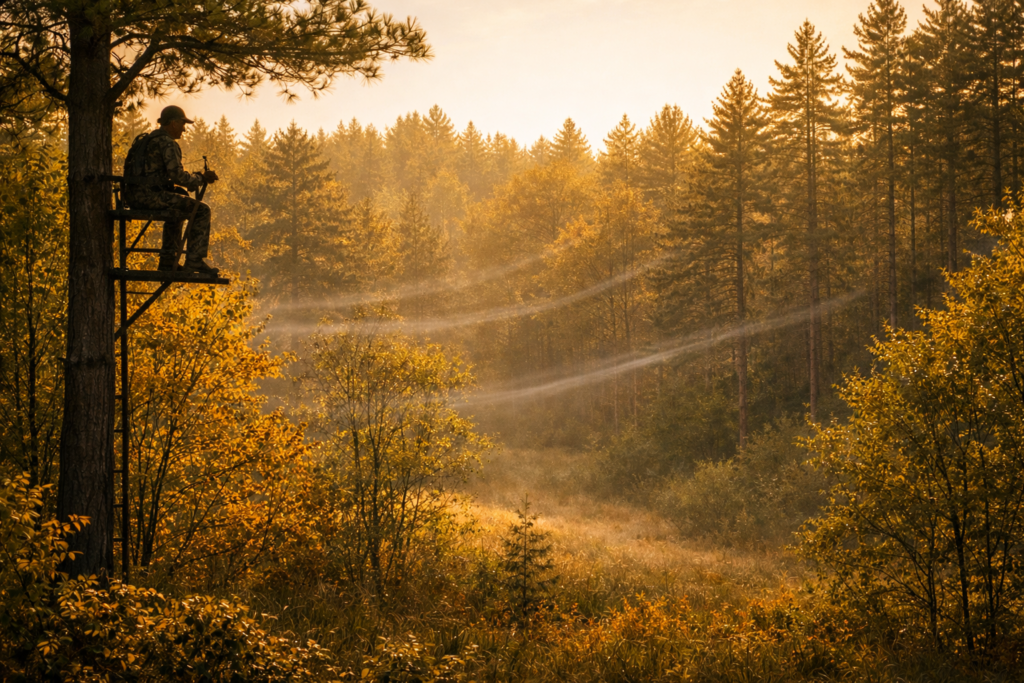
There’s a specific sound every hunter remembers.
A sharp blowing snort from somewhere you can’t see. Not the wind. A deer.
It picked up your scent.
And in that moment, it doesn’t matter how still you were or how long you waited. The hunt changed because of wind direction.
Understanding how wind direction affects deer movement is one of the most important skills a hunter can develop. Deer rely on their nose more than anything else. A mature deer can detect human scent from hundreds of yards away under the right conditions.
If the wind is wrong, the rest doesn’t matter.
What Does “NW Wind” Actually Mean?
This confuses more hunters than most will admit.
When you hear:
“NW wind”
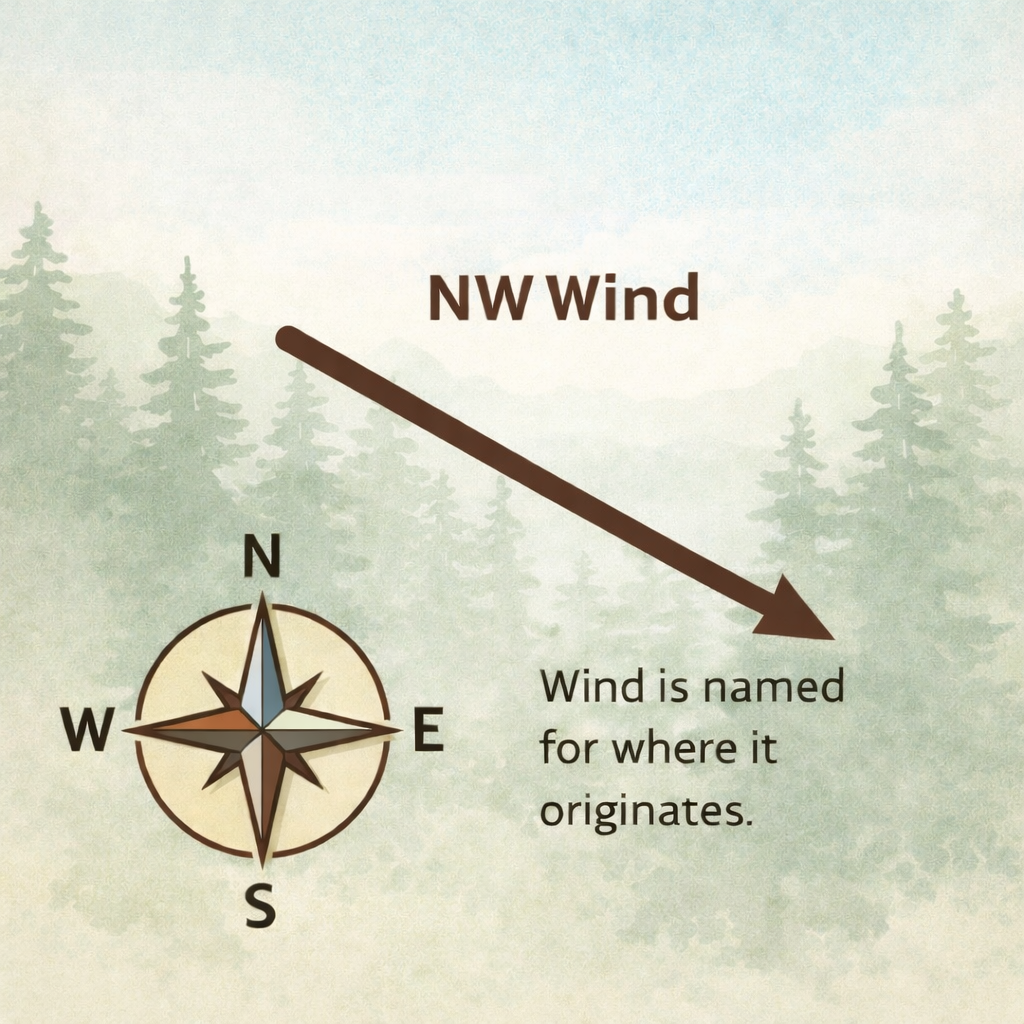
That means the wind is coming from the northwest and blowing toward the southeast.
Wind is named for where it originates — not where it is going.
If the forecast says:
- North wind → blowing south
- South wind → blowing north
- NW wind → blowing toward SE
- SW wind → blowing toward NE
That single misunderstanding can ruin a setup.
Why Wind Direction Matters So Much to Deer
Wind direction determines where your scent travels.
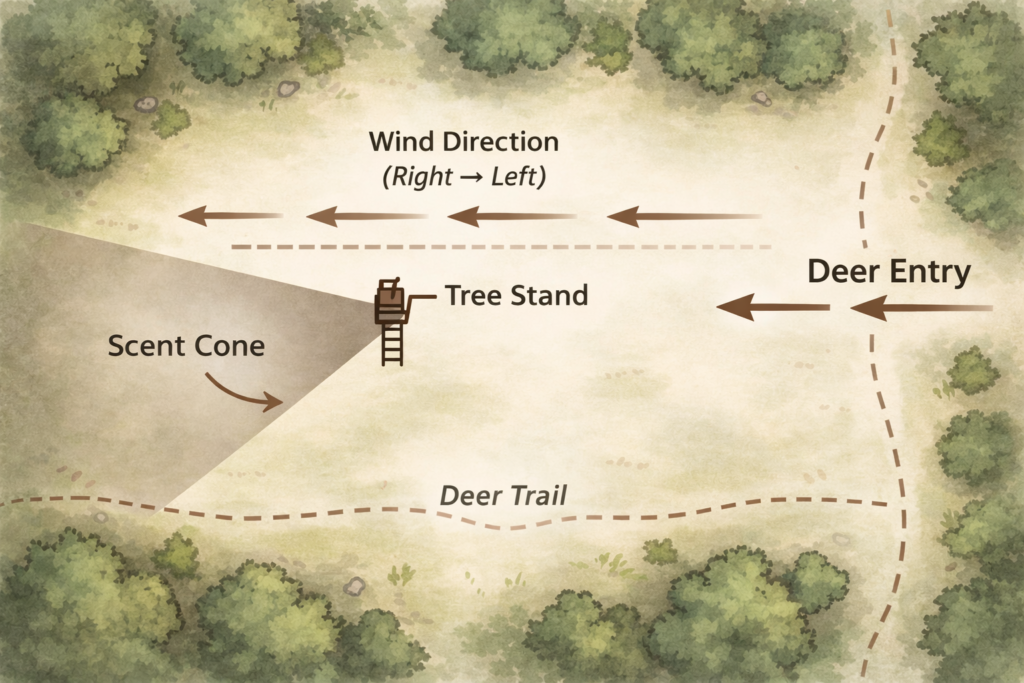
Your scent doesn’t sit around your stand. It moves. It creates what is commonly called a scent cone — an invisible stream of human odor carried downwind.
Deer use wind as their primary defense. They often travel:
- With the wind in their face
- Quartering into the wind
- Using crosswinds to scent-check areas
If your scent cone reaches their travel route, you may never see them — only hear that warning snort.
For deeper movement strategy, see:
Understanding Deer Movement: What Actually Matters (And What Doesn’t)
What Is a Scent Cone?
A scent cone is the downwind spread of human odor from your position.
It widens as it moves away from you. The farther it travels, the larger the affected area becomes.
This is why hunting directly facing into the wind is generally safer than having wind at your back.
How to Choose the Right Wind for Your Setup
Let’s simplify this.
You want the wind to:
- Blow from the deer toward you
- Or crosswind in a way that keeps your scent off primary travel routes
You do not want:
- Wind blowing from you toward likely deer entry
- Swirling wind in low terrain
- Wind at your back toward bedding areas
When wind is wrong, the decision becomes simple:
Adjust your stand location or hunt a different area.
How Terrain Changes Wind Direction
Wind does not always move in a straight line.
Terrain alters airflow.
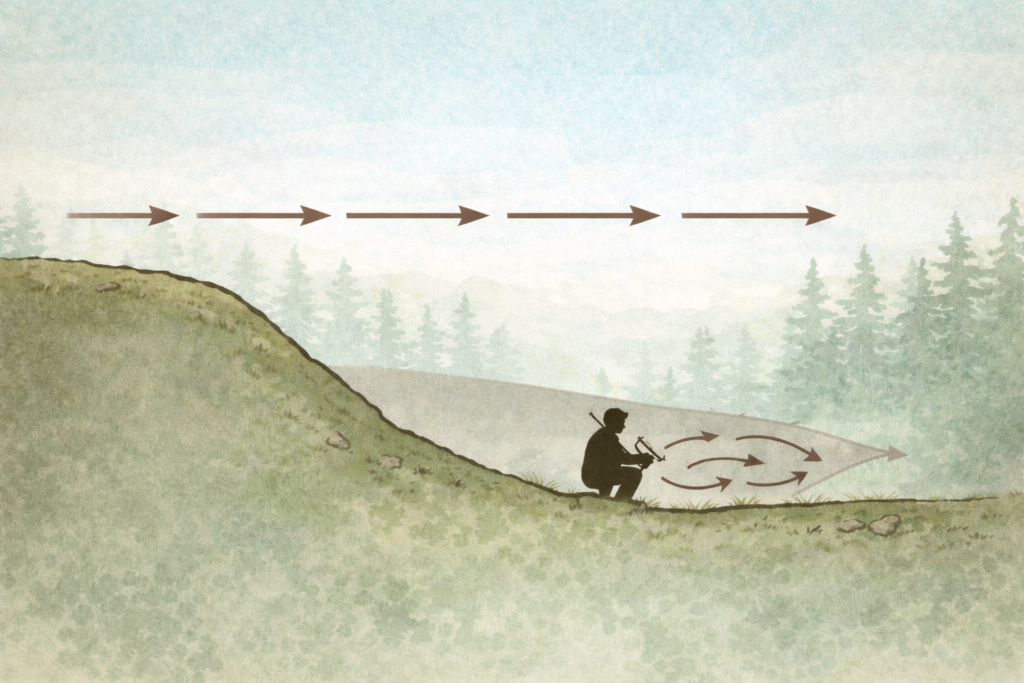
- Ridges tend to carry more consistent wind.
- Valleys and low areas often cause swirling.
- Thermals (rising and falling air based on temperature) shift airflow during morning and evening.
This is why a wind that looks good on paper can behave differently in the woods.
For scouting considerations that pair with wind planning, read
[Scouting Basics]
Tools That Help You Read Wind
Even experienced hunters misjudge wind without checking it.
A simple wind checker is an awesome tool to help keep track of wind direction.
Wind awareness is not guesswork. It is observation.
When to Sit Tight — And When to Leave
If you hear a deer snort downwind behind you, there is often little you can do.
If you suspect your scent cone is blowing into expected deer entry in front of you, it may be time to adjust.
Wind direction is not something you “hope works out.”
It either favors you — or it does not.
Most frustration in hunting does not come from lack of deer.
It comes from misunderstanding wind.
Once you understand:
- Where wind originates
- Where your scent travels
- How terrain shifts airflow
Your decisions become clearer.
Frequently Asked Questions
Does a north wind mean it’s blowing north?
No. A north wind means it is coming from the north and blowing south.
How far can deer smell human scent?
Under the right conditions, deer can detect human odor from hundreds of yards away. Wind speed, humidity, and terrain all affect scent travel.
Is crosswind hunting effective?
Yes. A controlled crosswind that keeps your scent off primary travel routes can be effective, especially when positioned carefully relative to terrain.
Why does wind swirl in valleys?
Airflow becomes unstable in low terrain due to elevation changes and thermal shifts. Wind hitting slopes can redirect, creating inconsistent scent patterns.
Wind direction is not a detail.
It is the foundation.