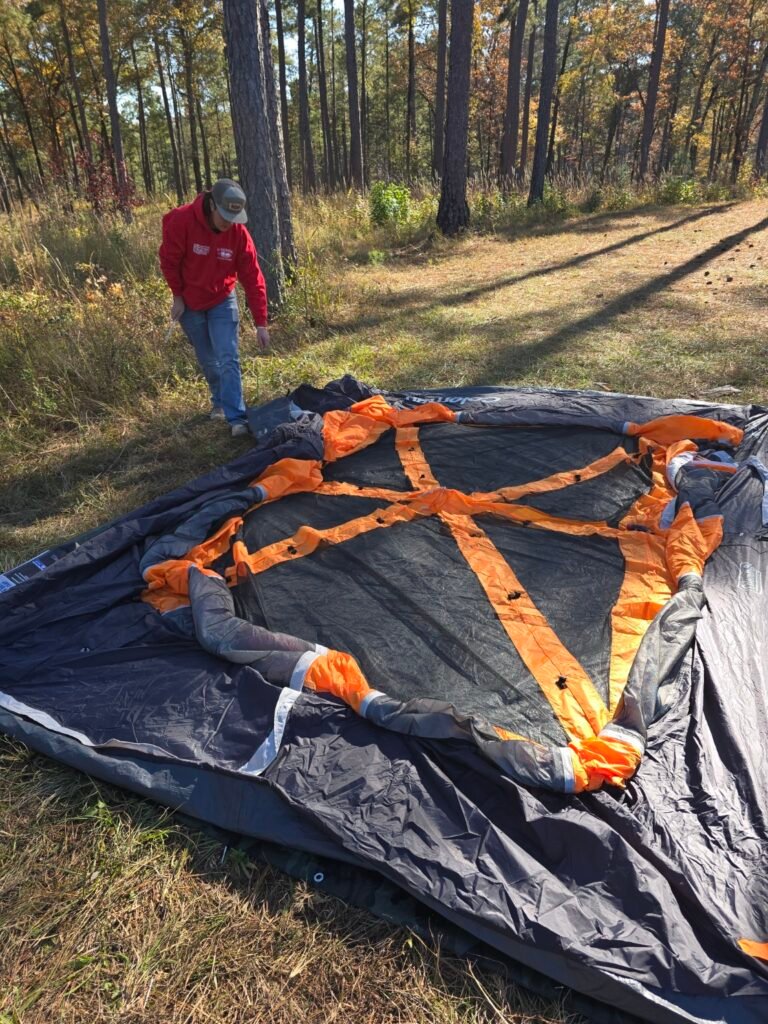
There’s something I’ll never forget from my time as a wildland firefighter.
We were at spike camp working night shift. We got back, cleaned up, grabbed food, and just as I was about to sleep for a few hours, the wind picked up.
Twenty to thirty mile-per-hour gusts.
Normally that wasn’t a big deal.
But when I stepped out of the food tent, I saw something I won’t forget.
Tents.
Dozens of them.
Rolling across the landscape like tumbleweeds. Flying through the air like kites. Gear scattered everywhere.
What did every single one have in common?
Not one had tent stakes in the ground.
Tent setup isn’t cosmetic. It’s structural. And if you want to see how a tent setup fits into the full arrival system at camp, read Camping for Beginners: How to Plan, Pack, and Arrive Without Stress
If you want the full arrival sequence that makes setup calm instead of chaotic, start with:
Camping Setup Order: What to Set Up First (And Why It Matters)
Now let’s walk through how to set up a camping tent the right way.
Step 1: Choose and Clear the Ground
Before you unpack the tent, choose the right location.
Look for:
- Flat ground
- Slight elevation (avoid natural water runoff paths)
- No exposed roots or sharp rocks
- Some wind protection if possible
Water always flows downhill. Even small dips collect rain.
After choosing your spot, clear:
- Sticks
- Pinecones
- Stones
- Sharp debris
Small objects become pressure points under sleeping pads and can damage tent floors over time.
Taking five extra minutes here prevents a miserable night later.
Step 2: Use a Tent Footprint or Tarp Properly
A tent footprint protects the tent floor from moisture and abrasion.
But here’s the common mistake: using a tarp that extends beyond the tent edges.
If rain hits exposed tarp, it funnels water underneath the tent.
Your footprint should be:
- Slightly smaller than the tent
or - Folded neatly under the edges
A basic durable tarp works well when sized correctly.
A footprint extends the life of your tent and adds moisture protection. It’s a simple upgrade that pays off.
Step 3: Fully Assemble Tent Poles Before Raising
Most modern tents use shock-corded poles.
Let them snap together naturally and make sure each section is fully seated. Half-connected poles bend easily under tension.
Lay everything out first:
- Tent body
- Poles
- Stakes
- Rainfly
Organized setup reduces mistakes.
Step 4: Raise the Tent Body
Insert poles through sleeves or attach via clips depending on design.
Clip-style tents are generally faster for beginners. Sleeve-style tents can be slightly more stable in wind.
Raise the tent body fully before tightening anything down.
Lightly stake the four corners to hold position, but don’t drive stakes all the way yet. You may need small adjustments.
Step 5: Stake Your Tent Correctly (This Is Not Optional)
This is where most problems start.
Drive stakes at a 45-degree angle away from the tent. That increases holding strength.
Use:
- A rubber mallet
- The back of a hatchet
- A solid rock if needed
Thin stock stakes often bend in hard soil or high wind.
Upgrading to stronger stakes makes a noticeable difference in stability.
Wind doesn’t care how tired you are.
Stake your tent.
Step 6: Attach the Rainfly and Tension Guylines
The rainfly is not just for rain.
It:
- Adds wind resistance
- Reduces condensation
- Protects from dew
- Adds structural stability
After attaching the rainfly:
- Tighten guylines
- Ensure the fly does not touch tent walls
- Adjust vents if available
Loose rainflies flap loudly and reduce protection. Proper tension keeps everything quiet and secure.
Step 7: Final Stability Check
Before moving on:
- Confirm stakes are secure
- Check pole alignment
- Confirm rainfly coverage
- Test zippers
- Look at wind direction
Two minutes of inspection prevents midnight surprises.
Instant Tents: Pros and Cons
Instant tents are popular for good reason.
Pros:
- Faster setup
- Fewer loose pole sections
- Beginner-friendly
Cons:
- Heavier
- More mechanical parts
- Often less durable in sustained high wind
Even instant tents still require:
- Proper ground selection
- Proper staking
- Proper rainfly tension
Convenience doesn’t replace fundamentals.
A solid mid-tier instant tent can work well for family camping.
Quality Tent Stakes and Hardware Matter
Back to spike camp.
Every tent that rolled?
No stakes.
Not cheap stakes.
No stakes at all.
But even properly staked tents can fail if hardware is weak.
Quality stakes, solid guylines, and proper tension are small details that prevent major problems.
Shortcuts show up later.
Usually at 2 a.m.
Common Beginner Tent Setup Mistakes
- Setting up in low ground
- Skipping the footprint
- Not staking corners
- Ignoring wind direction
- Over-tightening immediately
- Assuming calm weather will last
Most tent failures are preventable. And most of them happen when small steps are skipped.
Frequently Asked Questions
Do I need to stake my tent if there’s no wind?
Yes. Weather shifts quickly. Always stake your tent.
Should I use all the guylines?
If wind or rain is possible, yes. Guylines add stability and reduce stress on poles.
Are instant tents good for beginners?
Yes, but they still require proper staking and setup.
What’s the best ground for a tent?
Flat, elevated, debris-cleared ground away from water runoff.
Final Thoughts
Setting up a camping tent isn’t complicated.
It only feels complicated when rushed or skipped.
Clear the ground.
Use a footprint.
Assemble fully.
Stake correctly.
Tension properly.
Those simple steps separate a calm night from a long one.